


Reviewed and updated: 23 July 2026
Best fish oil for heart health: what to look for
The best fish oil for heart health is the one with the highest clearly stated EPA and DHA per serving, comfortably above 250 mg combined, in a well-absorbed form and tested for purity, rather than the one with the biggest number on the front of the bottle. That is the short answer, and I say it because EPA and DHA, the two long-chain omega-3s from oily fish, genuinely contribute to the normal function of the heart, yet a lot of shelf products quietly fall short of the amount that matters. Below I will show you how to read a fish oil label the way I do.

TL;DR
- What it is: concentrated EPA and DHA, the long-chain omega-3 fats from oily fish, in an easy daily softgel.
- Who it is for: adults who do not eat oily fish a couple of times a week and want a reliable omega-3 top-up. It contains fish, so it is not for a fish allergy or a vegan diet (algae is the plant-based route).
- The one thing to know: EPA and DHA contribute to the normal function of the heart, with the beneficial effect from 250 mg a day. Read the EPA and DHA figures on the back, not the fish-oil weight on the front.
The number that matters: 250 mg of EPA and DHA
EPA and DHA contribute to the normal function of the heart, with the beneficial effect obtained at a daily intake of 250 mg of EPA and DHA combined. That 250 mg figure is the one to keep in your head: it is the bar a fish oil needs to clear comfortably. Most well-made products should reach it in a single serving with room to spare, and if you cannot see the EPA and DHA numbers to check, that in itself tells you something.
The underdosing trap: fish oil weight is not EPA and DHA
This is where most fish oils fall down, and it is my number-one tip. A bottle might shout 1,000 mg fish oil on the front, but fish oil weight is not the same as EPA and DHA. That 1,000 mg might contain only around 180 mg EPA and 120 mg DHA, with the rest being other fats. Always turn the bottle over and read the EPA and DHA figures specifically, per serving. If a product states only total omega-3 or fish oil and hides the EPA and DHA split, that is usually a sign the active amounts are low.
EPA and DHA: what each one is
EPA (eicosapentaenoic acid) and DHA (docosahexaenoic acid) are the two long-chain omega-3s your body puts to work. For the heart, what counts is the combined EPA and DHA reaching 250 mg a day. DHA also does extra duty: DHA contributes to the maintenance of normal brain function and to the maintenance of normal vision, each at a daily intake of 250 mg of DHA. Interestingly, the two are not identical in the body. According to research retrieved from PubMed, a randomised controlled trial in young healthy adults found that DHA lowered blood triglycerides while EPA did not, pointing to genuinely different metabolic roles for the two fats (Klingel et al., 2019, DOI). I break down the ratio and amounts in EPA vs DHA: how much omega-3.

Form and absorption: triglyceride vs ethyl ester
The chemical form of the oil affects how well it is absorbed, which is a genuine quality consideration. According to research retrieved from PubMed, a randomised, double-blind trial in 150 healthy volunteers found that identical doses of EPA and DHA raised the omega-3 index (the proportion of EPA and DHA in red blood cell membranes) faster and to a greater extent when taken as re-esterified triacylglycerides than as ethyl esters over six months (Neubronner et al., 2011, DOI). The practical takeaway is to favour a well-formulated oil and to take it with food, rather than judging a product on its front-of-pack number alone.

Purity and freshness
Oily fish can concentrate contaminants from the sea, so heavy-metal testing genuinely matters for a fish oil. Omega-3 oils also oxidise over time, and a rancid oil is both unpleasant and lower quality, so freshness counts too. A clean softgel with no strong fishy aftertaste is a reasonable everyday indicator. Our omega-3 is tested for purity and heavy metals at our GMP-certified facility, with a Certificate of Analysis available on request.
How much, and how to take it
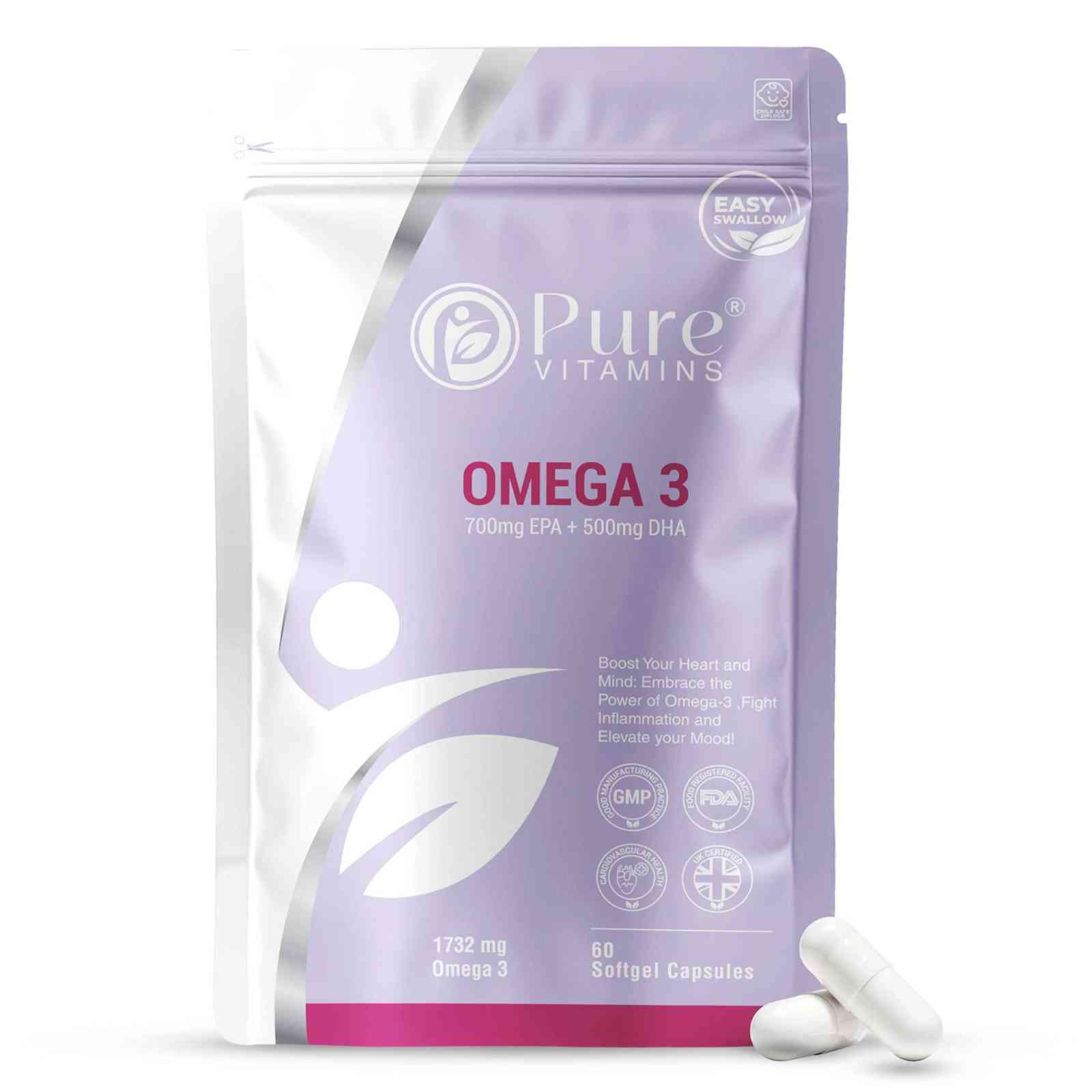
For the heart, 250 mg of EPA and DHA combined per day is the established threshold, though many people choose to take more. Take it with a meal that contains some fat, which supports absorption, and be consistent, since steady daily intake matters more than the time of day. Our High-Strength Omega-3 Fish Oil provides 1,732 mg of omega-3 per serving, with EPA and DHA well above the 250 mg threshold, so you clear that bar comfortably in one serving.

Fish oil or algae?
Fish oil is the traditional source of EPA and DHA, but algae-derived omega-3 is the plant-based route for vegans and vegetarians, since the fish ultimately get their omega-3 from algae in the first place. If you avoid fish, an algae omega-3 is the option to look at, and I compare the two, plus when to take omega-3, in fish oil vs algae omega-3. There is also an honest look at the vision research in omega-3 and dry eyes.
A few cautions worth knowing
Omega-3 fish oil is well tolerated by most people. It contains fish, so it is not suitable if you have a fish allergy. If you take blood-thinning medication such as warfarin, are pregnant or breastfeeding, or are managing a medical condition, speak to your GP or pharmacist before starting a fish oil. As with any supplement, follow the serving on the label rather than assuming more is automatically better.
An honest checklist for choosing
- Clearly stated EPA and DHA per serving, not just total omega-3 or fish oil weight.
- Combined EPA and DHA comfortably above 250 mg, ideally well above so a sensible serving clears the threshold easily.
- A well-absorbed, well-formulated oil, taken with food.
- Tested for purity and heavy metals, with freshness you can taste (no strong rancid aftertaste).
- A source that suits your diet: fish oil, or algae omega-3 if plant-based.
What to realistically expect
Omega-3 is a steady, everyday supplement rather than something you feel overnight. Its value is in consistent daily intake of enough EPA and DHA, which is exactly why the label numbers matter more than the marketing. Choose a product that clears the threshold comfortably, take it with food, and keep it up.
Where Pure Vitamins fits
Our High-Strength Omega-3 Fish Oil is built to these numbers: 1,732 mg of omega-3 per serving with EPA and DHA well above the 250 mg threshold, in softgels, tested for purity and heavy metals at our GMP-certified facility. EPA and DHA contribute to the normal function of the heart, and DHA contributes to the maintenance of normal brain function and normal vision. For the fuller picture of omega-3's roles, see omega-3 for heart and brain health, and browse the wider range on our Pure Vitamins UK home page.
Frequently asked questions
How much EPA and DHA do I need for the heart? EPA and DHA contribute to the normal function of the heart, with the beneficial effect obtained at a daily intake of 250 mg combined.
Why is 1,000 mg fish oil misleading? Fish oil weight is not the same as EPA and DHA. A large fish-oil number can contain only a small amount of the active EPA and DHA, so read the back-of-pack figures.
Does the form of fish oil matter? Form affects absorption. Research in healthy volunteers found the triglyceride form raised the omega-3 index more than the ethyl ester form. Taking fish oil with food also helps.
Is there a vegan option? Yes, algae-derived omega-3 provides EPA and DHA without fish.
When should I take it? With a meal containing some fat, consistently. Time of day is less important than taking it regularly.
Food supplements should not be used as a substitute for a varied, balanced diet and a healthy lifestyle. Contains fish. If you are pregnant, breastfeeding, taking medication or managing a medical condition, speak to your GP or pharmacist before starting a new supplement.
Dr. Miron, Founder of Pure Vitamins UK.
