


Reviewed and updated: 22 September 2026
Fish oil vs algae omega-3, and when to take it
Fish oil and algae omega-3 both deliver the long-chain omega-3s EPA and DHA. The difference is simply the source: fish oil comes from oily fish and is the traditional, economical option, while algae omega-3 comes from marine algae and is the vegan and vegetarian route. The best time to take either is with a meal that contains some fat, at whatever time of day you will actually stick to. Along the way this guide clears up the question underneath the question, which is the difference between "omega-3" and "fish oil" in the first place, where cod liver oil fits, and the label arithmetic that means a 1,000 mg capsule is nothing like 1,000 mg of omega-3.

TL;DR
- Omega-3 is the nutrient; fish oil is one source of it. That is the whole distinction, and most of the confusion online comes from treating them as two products.
- What they are: two sources of the same active omega-3s, EPA and DHA. Fish oil from oily fish, algae oil from marine algae.
- Who each is for: fish oil for most fish-eaters on cost and choice; algae oil for vegans, vegetarians, and anyone who dislikes fish.
- Cod liver oil is a third thing: an omega-3 source that also supplies vitamins A and D, which is both its advantage and its main caution.
- The one thing to know: take it with a fatty meal, choose on EPA and DHA content rather than total oil weight, and be consistent.
First: omega-3 and fish oil are not the same thing
This trips people up constantly, and it is worth two minutes because it changes how you read every label afterwards.
Omega-3 is a family of fatty acids, not a product. Three matter in everyday nutrition:
- ALA (alpha-linolenic acid), the short-chain plant omega-3 in flaxseed, chia, rapeseed oil and walnuts.
- EPA (eicosapentaenoic acid), a long-chain marine omega-3.
- DHA (docosahexaenoic acid), the other long-chain marine omega-3.
Fish oil is simply an oil pressed from oily fish that happens to be rich in EPA and DHA. It is a delivery vehicle, one of several. Algae oil is another, cod liver oil is another, and oily fish on a plate is another still. So asking "should I take omega-3 or fish oil?" is a little like asking whether you should take vitamin C or an orange. The useful question is which source suits you, and how much EPA and DHA it actually delivers.
Why not just eat flaxseed or walnuts?
A fair question, since flax, chia and walnuts are often sold as omega-3 foods. They provide ALA, which the body has to convert into EPA and then DHA, and that conversion is poor. According to research retrieved from PubMed, a review of stable-isotope tracer studies in human adults concluded that conversion of ALA to EPA occurs but is limited, and that onward conversion to DHA is very low, with the fractional conversion greater in women than in men, possibly through a regulatory effect of oestrogen (Burdge and Calder, 2005, Reproduction Nutrition Development, DOI 10.1051/rnd:2005047, read it on PubMed).
So plant ALA foods are a genuinely good thing to eat, and they are not a reliable route to EPA and DHA. For those you want oily fish, fish oil or algae oil, which supply them ready-made.

The label arithmetic: a 1,000 mg capsule is not 1,000 mg of omega-3
This is the single most useful thing on this page, and it is where most omega-3 money is wasted.
A softgel described as "1,000 mg fish oil" tells you the weight of the oil in the capsule, not the amount of EPA and DHA in it. A standard, non-concentrated fish oil is roughly 30 per cent EPA and DHA combined, so that 1,000 mg capsule typically delivers somewhere around 300 mg of EPA plus DHA. The other 700 mg is other fatty acids.
So when you compare two products:
- Find the line that says EPA and DHA, usually stated separately in milligrams per capsule or per serving. That is the number that matters.
- Check the serving size. A generous-looking EPA and DHA figure spread across three softgels is a different product from the same figure in one.
- Then work out cost per 1,000 mg of EPA plus DHA, not cost per bottle. A concentrated oil with a higher price per capsule is frequently cheaper on this measure.
A product that shouts a big total-oil number on the front and buries the EPA and DHA on the back is telling you which number flatters it. The full amounts question, including the UK intake advice, is worked through in EPA vs DHA and how much you need.
Where cod liver oil fits in
Cod liver oil is the third option people weigh up, and it deserves its own answer because it is genuinely a different product rather than a cheaper fish oil.
It is pressed from the liver of cod rather than the flesh of oily fish, and the liver is where fat-soluble vitamins are stored, so cod liver oil supplies vitamins A and D alongside its EPA and DHA. Vitamin D contributes to the maintenance of normal bones and to the normal function of the immune system, which is a real bonus in a British winter.
Two honest caveats, though. First, cod liver oil is usually lower in EPA and DHA per spoonful or capsule than a concentrated fish oil, so if long-chain omega-3 is your goal you may need more of it. Second, and more importantly, the vitamin A is preformed retinol, and preformed vitamin A accumulates. That is why cod liver oil should not be doubled up with a multivitamin containing retinol without adding up the total, and why it is generally advised against in pregnancy, where high preformed vitamin A intake is specifically cautioned. If you are pregnant, take the omega-3 question to your midwife rather than to a shelf.
So which should you choose: fish oil, algae oil or cod liver oil?
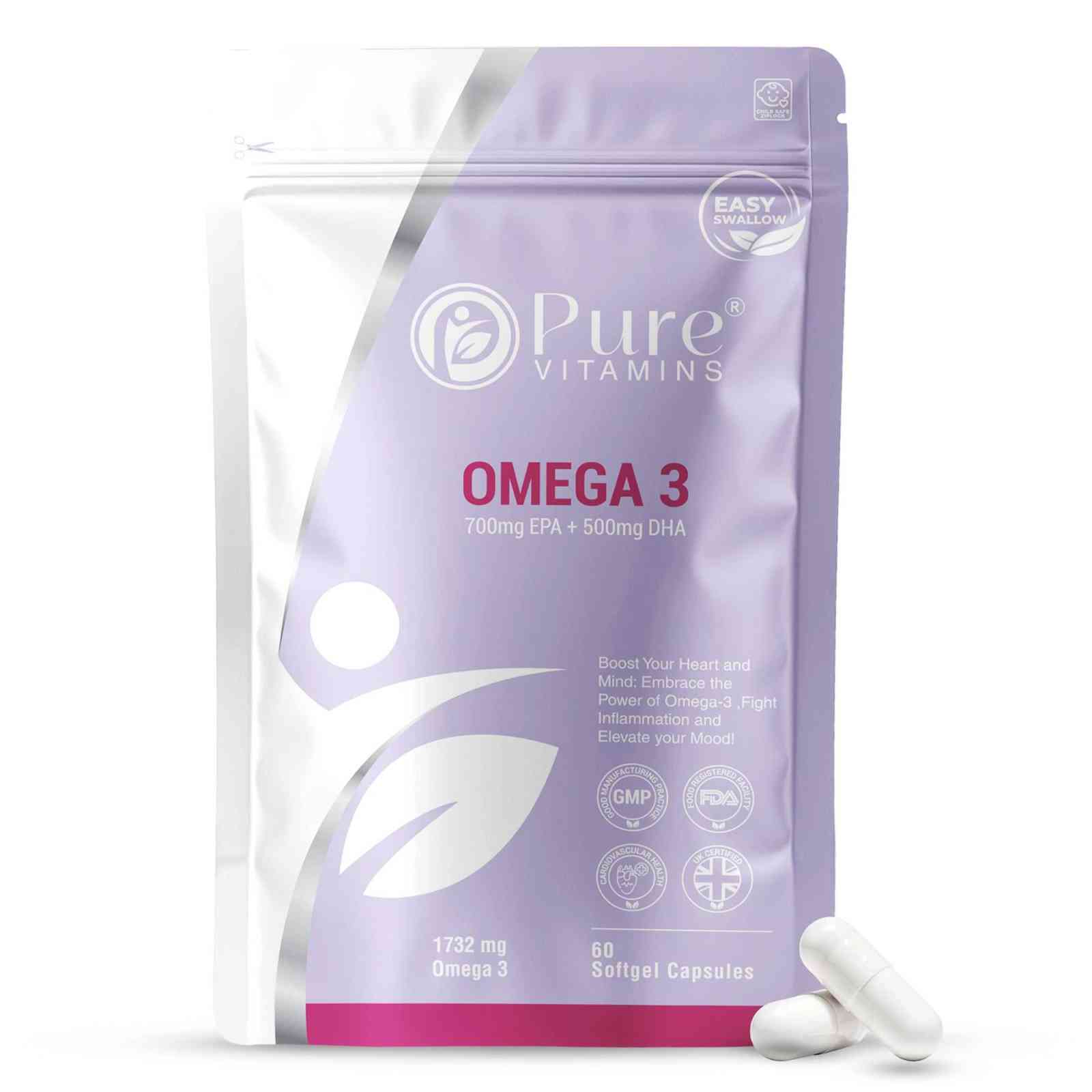
- Fish oil if you eat fish and want the most EPA and DHA for your money. It is the established, most studied and usually most economical route, and it is what our high-strength Omega-3 is.
- Algae oil if you are vegan or vegetarian, have a fish allergy, or simply dislike fish and any hint of a fishy repeat. Algae is where the fish get their omega-3 in the first place, so this is the original source rather than a substitute. It reliably supplies DHA and, in better products, EPA too, and it typically costs more per milligram of EPA and DHA.
- Cod liver oil if you specifically want the vitamin A and D that come with it, and you are willing to watch the retinol total across everything you take.
Neither of the first two is inherently superior. It comes down to your diet, your budget and what you will keep taking.

When is the best time to take omega-3?
Simple: take it with a meal that contains some fat. Omega-3s are fat-soluble, so food with a little fat supports absorption and tends to reduce any fishy repeat. There is no established magic time of day, so morning or evening both work, as long as it is with food.
Consistency is the real lever here, because omega-3 works by topping up the fatty acid content of your cell membranes steadily over weeks and months rather than in a single dose. That is also why you should not expect to notice anything from one capsule, and why a product you take daily at a modest amount beats a stronger one you take sporadically.
How do you reduce a fishy aftertaste?
A common gripe, and a fixable one. Taking fish oil with food, and choosing a fresh, good-quality oil, both help, and some people keep their capsules in the fridge. A well-made, properly stored fish oil should not taste strongly. A strong fishy repeat can be a sign of an oxidised or lower-quality oil, which is worth taking seriously rather than putting up with. Algae omega-3 sidesteps the fish taste entirely, which is one reason some people choose it beyond the vegan angle.
Does the form of omega-3 affect absorption?
It can. Omega-3 supplements come mainly as natural or re-esterified triglycerides, or as ethyl esters, which are the concentrated form produced during processing. In a randomised trial in 150 healthy volunteers, identical doses of EPA and DHA raised the omega-3 index faster and to a greater extent when taken as re-esterified triacylglycerides than as ethyl esters over six months (Neubronner and colleagues, 2011, European Journal of Clinical Nutrition, DOI 10.1038/ejcn.2010.239). Taking the oil with a fat-containing meal narrows that gap considerably, which is another reason the food advice above matters more than it sounds.
Freshness and oxidation: what the testing actually shows
Omega-3 oils are polyunsaturated, which is exactly what makes them prone to going rancid, so freshness is a legitimate quality question rather than marketing. The industry measures it with peroxide value, anisidine value and a combined Totox figure.
The picture is more reassuring than the scare stories suggest. According to research retrieved from PubMed, an analysis of 20 unflavoured omega-3 supplements on sale, including microalgae oils, found that all of them complied with the peroxide, anisidine and Totox limits set by the industry body for EPA and DHA omega-3s, and that only one product in the sample fell short of its label claim for omega-3 content (Pasini and colleagues, 2022, Biomolecules, DOI 10.3390/biom12101361, read it on PMC). That is a small sample from one market rather than a verdict on every product, but it is real data.
Practically: buy from a brand that turns over stock, check the best-before date, store it cool and away from light, and treat a strongly fishy oil as a reason to stop using that bottle.
How do you choose a good omega-3?
- Read the EPA and DHA content, not the total oil weight.
- Check the serving size so you know how many capsules that figure represents.
- Work out cost per 1,000 mg of EPA plus DHA and compare on that.
- Check purity testing, since oily fish can concentrate contaminants from the sea. Ours is formulated in the UK and tested for purity and heavy metals at our GMP-certified facility.
- Pick a strength you will actually take without swallowing a handful of capsules every morning.
A few cautions worth knowing
Fish oil contains fish, so it is not suitable for a fish allergy, in which case algae oil is the route. Take omega-3 with food. If you take blood-thinning medication such as warfarin, speak to your GP or pharmacist before starting, since omega-3 can affect clotting at higher intakes. Cod liver oil carries preformed vitamin A and should not be stacked with a retinol-containing multivitamin without adding up the total, and is generally advised against in pregnancy. If you are pregnant or breastfeeding, or managing a medical condition, speak to your GP, midwife or pharmacist first.
The takeaway
Omega-3 is the nutrient and fish oil is one source of it. Fish oil is the established, economical EPA and DHA route; algae omega-3 is the vegan and vegetarian alternative and the original source in the food chain; cod liver oil adds vitamins A and D along with a retinol caution. Take whichever you choose with a fatty meal at any consistent time, and compare products on EPA and DHA per serving rather than on the number on the front of the pack. For the amounts and the UK reference intakes, see EPA vs DHA, for the wider picture see omega-3 for heart and brain health, and for what to look for when buying, the best fish oil for heart health. Every guide we publish sits on the supplement guides hub, or browse the range on our Pure Vitamins UK home page.

Frequently asked questions
What is the difference between omega-3 and fish oil?
Omega-3 is the nutrient, a family of fatty acids including ALA, EPA and DHA. Fish oil is one source that happens to be rich in EPA and DHA. Algae oil, cod liver oil and oily fish itself are other sources of the same nutrients, so the real question is which source suits you and how much EPA and DHA it delivers.
Is algae omega-3 as good as fish oil?
Both provide EPA and DHA, and algae is where fish get theirs in the first place. Fish oil is the economical, most studied source; algae is the vegan and vegetarian option and avoids any fishy taste, usually at a higher price per milligram. Choose on diet, preference and cost.
How much omega-3 is in a 1,000 mg fish oil capsule?
Usually around 300 mg of EPA plus DHA, because a standard non-concentrated fish oil is roughly 30 per cent long-chain omega-3. The 1,000 mg refers to the weight of oil, not the omega-3 in it, which is why you compare products on the EPA and DHA line.
Is cod liver oil the same as fish oil?
No. Cod liver oil comes from the liver rather than the flesh, so it also supplies vitamins A and D. It is typically lower in EPA and DHA than a concentrated fish oil, and its preformed vitamin A means it should not be stacked with a retinol-containing multivitamin and is generally advised against in pregnancy.
When should I take omega-3?
With a meal containing some fat, at any consistent time of day. Omega-3 builds up steadily over weeks, so the habit matters far more than the hour.
How do I stop fishy burps?
Take it with food, choose a fresh, quality oil, and consider refrigerating capsules. A strong fishy repeat can indicate an oxidised oil, so it is worth changing product rather than tolerating it. Algae omega-3 avoids the fish taste entirely.
Is fish oil suitable for vegans?
No. Algae omega-3 is the vegan and vegetarian route to EPA and DHA, and it is also the answer for anyone with a fish allergy.
Food supplements should not be used as a substitute for a varied, balanced diet and a healthy lifestyle. Contains fish. If you are pregnant, breastfeeding, taking medication (including blood thinners) or managing a medical condition, speak to your GP or pharmacist before starting a new supplement.
Signed, Dr. Miron, Founder of Pure Vitamins UK.
Related articles
- Omega-3 for heart and brain health UK: an honest guide
- EPA vs DHA: what's the difference and how much?
- Best fish oil for heart health: what to look for
- High-Strength Omega-3 Fish Oil (EPA & DHA softgels)
Sources
- Burdge GC and Calder PC (2005). Conversion of alpha-linolenic acid to longer-chain polyunsaturated fatty acids in human adults. Reproduction Nutrition Development. DOI 10.1051/rnd:2005047. PubMed 16188209
- Pasini F and colleagues (2022). Assessment of lipid quality in commercial omega-3 supplements. Biomolecules. DOI 10.3390/biom12101361. PMC9599935
