

Quercetin and resveratrol in NAD+ supplements are two plant compounds you will spot on the label of many NMN-based formulas, and the honest answer to "why are they there?" is composition: they are the recognisable companion polyphenols in the NAD+ supplement category. This guide explains what each one is, how well it absorbs, why they sit alongside NMN, and the safety points that actually matter.
Reviewed and updated: 9 August 2026

Quercetin and resveratrol in NAD+ supplements: the quick answer (TL;DR)
- Quercetin: a flavonoid (a type of polyphenol) found in everyday foods like onions, apples and capers, included as a composition choice.
- Resveratrol: a stilbene polyphenol from grape skins, the compound behind the old red-wine folklore, and another familiar companion in NAD+ precursor formulas.
- Why they sit with NMN: they are the recognisable polyphenols in the NAD+ category. The mechanistic reasons people cite are research interest, not settled outcomes.
- What to know: both absorb modestly and variably, both are sensibly taken with food, and concentrated doses can interact with some medicines.
What is quercetin?
Quercetin is a flavonoid, a sub-group of the polyphenols, found naturally in many plant foods such as onions, apples, berries and capers, so most of us eat small amounts every day without thinking about it. It is one of the more studied dietary flavonoids and is sold both as a standalone supplement and as a companion ingredient. In our NMN Fusion Pro, quercetin sits as part of a recognisable NAD+ precursor blend alongside NMN, resveratrol, TMG and CoQ10.
How well does quercetin absorb?
Honestly, not especially well, and the results vary a lot from person to person. A human pharmacokinetic study giving 500 mg of quercetin in different carriers found that peak blood levels differed several-fold depending on the format, with high variability between individuals within each group (Kaushik et al., 2012). The practical message is that the figure on a label is the amount you take, not the amount that reaches your bloodstream, and that is true of most polyphenols.
Why is quercetin added to NAD+ supplements?
The straightforward reason is that it is a popular, well-recognised polyphenol in the NAD+ supplement category and helps round out a comprehensive formula. You will see various mechanistic rationales discussed online, but those are hypotheses and areas of active research rather than settled conclusions. We include quercetin as a considered composition choice and describe it as exactly that.

What is resveratrol?
Resveratrol is a stilbene polyphenol found in the skin of grapes, in red wine and in some berries. It is one of the best-known compounds discussed alongside NAD+ precursors, which is why formulas so often pair them. Like quercetin, it goes in on a composition basis, as a recognisable part of the blend.
How well does resveratrol absorb?
Resveratrol has an interesting absorption profile: it is well absorbed but then very rapidly metabolised, so the amount of unchanged resveratrol circulating in the blood is low. A human pharmacokinetics review found that at least about 70% of an oral dose is absorbed, yet most is quickly converted to sulfate and glucuronide conjugates (Cottart et al., 2010). A common piece of advice is to take resveratrol with fatty food, but the evidence there is mixed: some human data suggest a high-fat meal slows or even reduces resveratrol absorption rather than improving it, with the rate (not the total amount) delayed by food (Chachay et al., 2011). Taking it with a normal meal is fine for comfort, but do not expect food to transform its bioavailability.
Why are resveratrol and NAD+ precursors combined?
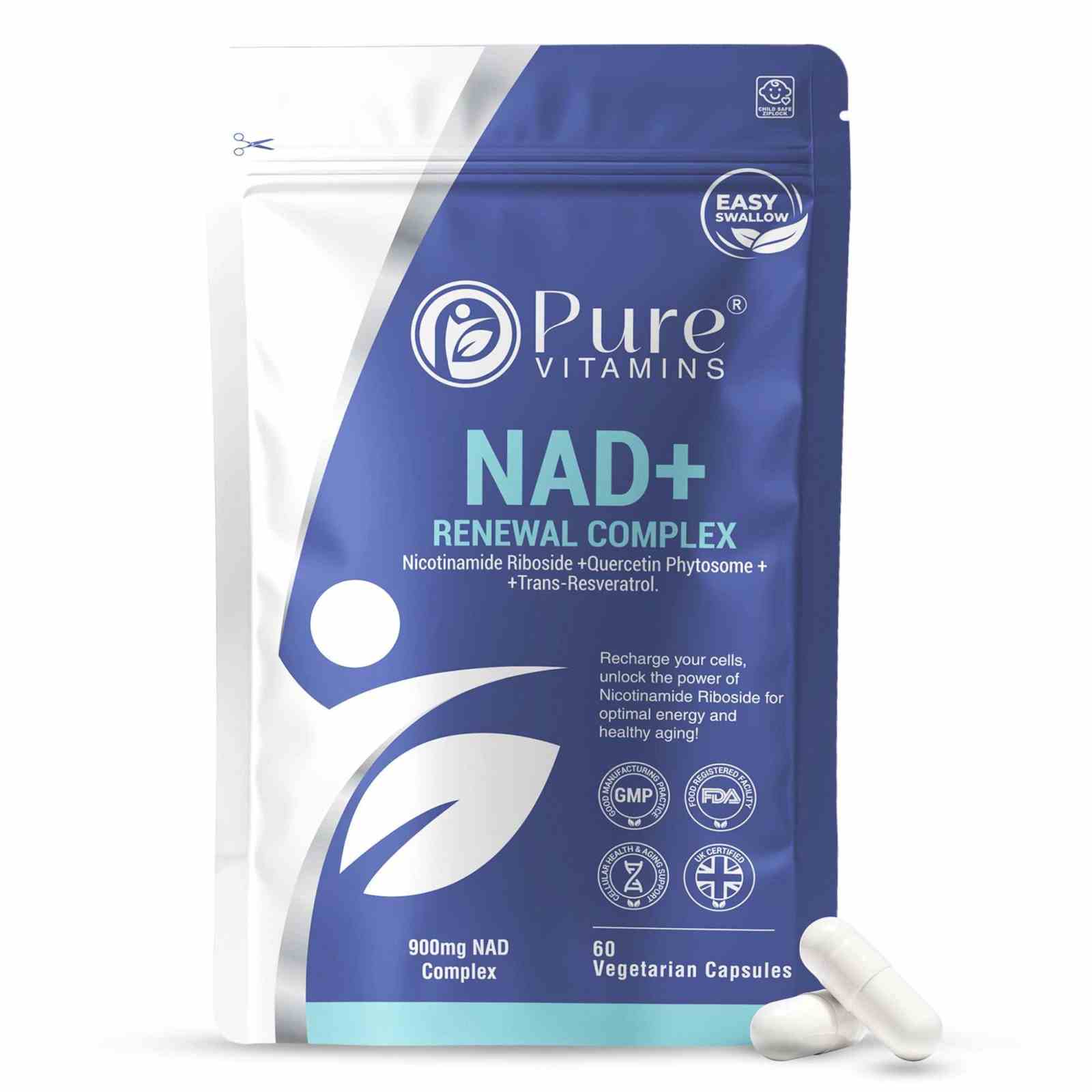
Resveratrol and NAD+ precursors such as NMN and NR are commonly grouped together in the NAD+ supplement category, which is why formulas frequently pair them. Our NMN Fusion Pro includes resveratrol alongside NMN, with quercetin as a further polyphenol. The pairing reflects a recognisable, comprehensive composition, and I would rather tell you plainly why these ingredients appear together than dress it up. For more on the NMN side, see NMN vs NR: which is right for you?
How and when to take them
- With food: sensible for tolerability and convenient as part of a daily routine.
- Consistency over timing: regular daily intake is the approach people take, rather than expecting an acute, same-day effect.
- Realistic expectations on dose: because both compounds absorb modestly and variably, the label amount is not the amount delivered to your tissues.
Safety, interactions and who should be cautious
- Medication interactions: concentrated quercetin and resveratrol can interact with some medicines, including via liver enzymes that process many drugs. If you take prescription medication, check with your GP or pharmacist before a concentrated supplement.
- Blood thinners: polyphenols such as resveratrol may affect bleeding tendency, so seek advice if you take anticoagulants or antiplatelet medicines.
- Pregnancy and breastfeeding: there is limited safety data for concentrated quercetin and resveratrol, so they are best avoided unless a GP advises otherwise.
- From food vs supplements: quercetin and resveratrol from a normal diet are eaten routinely and safely; concentrated supplement doses are a different matter and warrant the checks above.
What to look for when choosing
- Clear amounts per ingredient: a transparent label that states how much quercetin and resveratrol you get, not a hidden proprietary blend.
- Sensible companions: recognisable NAD+ category ingredients rather than a long list of trace fairy-dusting.
- Quality and testing: a product manufactured in a GMP-certified facility and formulated in the UK.
- Honest marketing: be wary of any product making dramatic promises about these ingredients. A good formula sells on transparency and quality.
The takeaway
Quercetin is a well-studied plant flavonoid and resveratrol is a grape-skin polyphenol; both are popular companion ingredients in NAD+ precursor formulas and go in on a composition basis. Both absorb modestly and variably, both sit comfortably with a normal meal, and concentrated doses of either can interact with some medicines, so check with your GP if that applies to you. For the bigger picture see our guide to what NAD+ is and why it matters, what NMN is, the comparison of NMN vs NR, or browse everything at the Pure Vitamins UK home page.
Findings are paraphrased from the published literature as science and are not product claims. Food supplements should not be used as a substitute for a varied, balanced diet and a healthy lifestyle. Concentrated quercetin and resveratrol can interact with some medications; if you take prescription medicine, speak to your GP or pharmacist first. If you are pregnant, breastfeeding or managing a medical condition, seek advice before starting a new supplement. Dr. Miron, Founder of Pure Vitamins UK.

