

Type I and III collagen are the two numbers you will see most on a collagen label, and this guide explains clearly what they mean: what each type is, where it sits in the body, why they are so often paired, and what actually matters when you compare products. It is a plain-English composition explainer.
Reviewed and updated: 24 July 2026

Type I and III collagen: the quick answer (TL;DR)
- Type I: the body's most abundant collagen, concentrated in skin, bone, tendon and ligament.
- Type III: usually found alongside Type I, in skin, blood vessels and hollow organs.
- Type II: the separate one, found mainly in cartilage.
- Why I and III are paired: together they make up about 90% of the collagen in skin, and bovine sources are naturally rich in both.
Collagen is not one thing
Collagen is the most abundant structural protein in the body, and it is not a single molecule. Around 29 different types have been identified, but a small number dominate: a review of collagen biology reports that types I, II and III together represent roughly 80 to 90% of all the collagen in the body, and types I and III alone make up about 90% of the skin (Mendoza-Munoz et al., 2023). That is why supplements concentrate on these few types rather than the long tail of rarer ones.
Type I: the most abundant
Type I is the major collagen in the body, with a widespread distribution across skin, bone, tendon, ligament, cornea and dentine, and it makes up over 90% of the organic matrix of bone. Structurally it is a heterotrimer, built from two identical alpha-1 chains and one alpha-2 chain (De Paepe and Malfait, 2004). When people talk about collagen for skin and general connective structure, Type I is the workhorse they mean.
Type III: Type I's usual companion
Type III is a fibrillar collagen built from three identical alpha-1 chains (a homotrimer), and it is found in stretchable tissues such as skin, blood vessel walls and hollow organs, where it commonly coexists with Type I (De Paepe and Malfait, 2004). In skin specifically, Type I makes up around 85 to 90% and Type III the remaining 10 to 15% (Mendoza-Munoz et al., 2023). Because the two naturally occur together, they are the natural pairing for a general collagen supplement.

Type II: the cartilage one
For completeness, Type II is the collagen found almost exclusively in cartilage. It is a different product category from a general Type I and III collagen and is usually sold separately. So if a label says "Type I and III", it is simply telling you it is a general skin-and-connective-tissue profile rather than a cartilage-specific one.
Type I and III: the common pairing
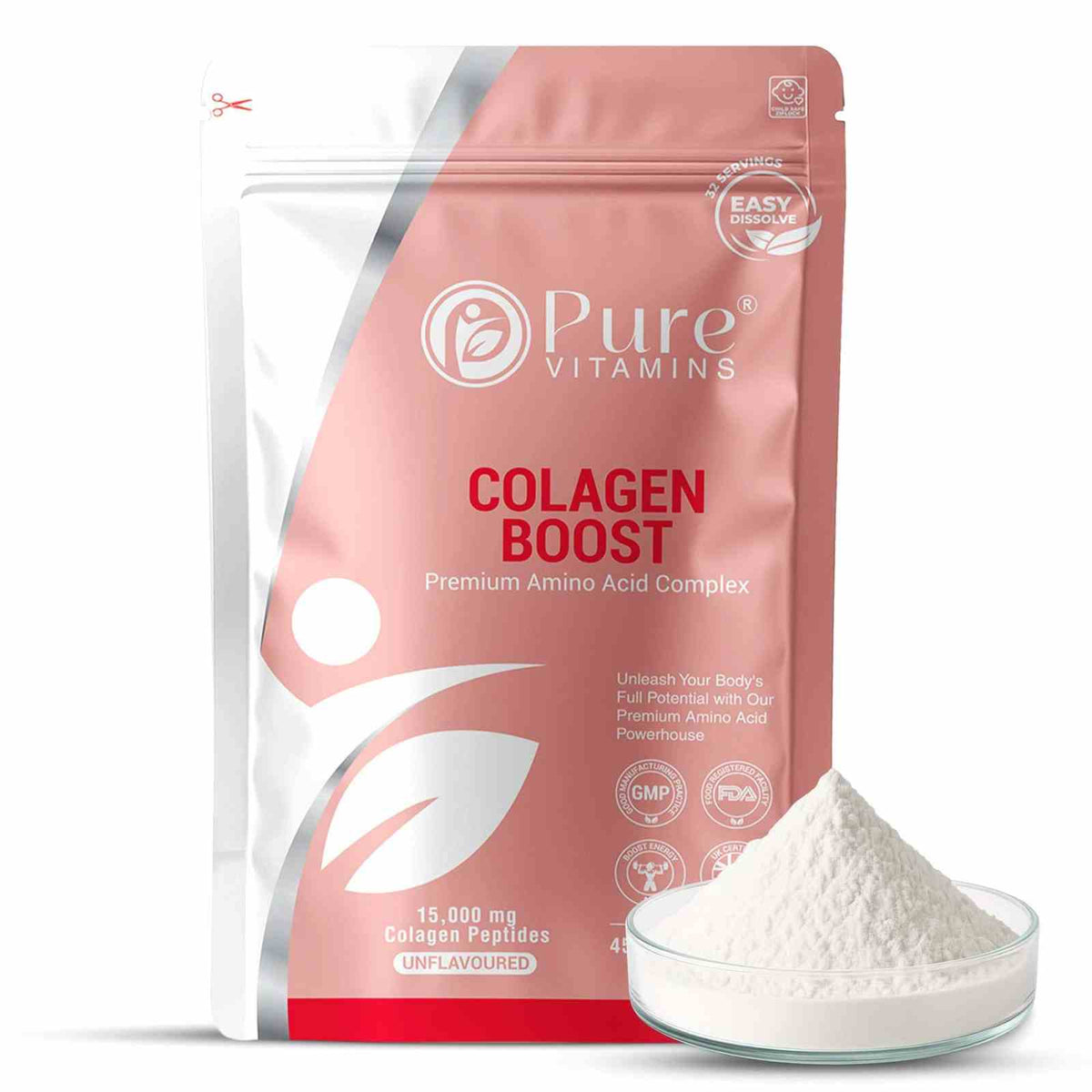
Most general collagen supplements, including our Bovine Collagen Powder, provide Types I and III together, because that is the combination naturally abundant in skin and the body's broader connective structure. Bovine (cattle) sources are naturally rich in both, which is why they are the usual route for a Type I and III product. Marine collagen, by contrast, is predominantly Type I. We compare the sources in marine vs bovine collagen.
What "hydrolysed" adds
Native collagen is a large, tightly cross-linked molecule (over 300 kilodaltons) and is essentially insoluble in water, which is why it is hard to use directly. Hydrolysing it breaks the protein into much shorter peptides that dissolve cleanly and are more readily digested and absorbed (Janssens-Bocker et al., 2024). That is the standard form for supplements. Our powder provides hydrolysed Type I and III peptides at 14,000 mg per serving, unflavoured, which mixes into hot or cold drinks without clumping. For the format question, see collagen powder vs capsules.
Does the type matter when choosing?
Honestly, for most people the type matters less than the marketing suggests. Type I and III is the standard, sensible choice for a general collagen supplement. The genuinely useful things to check are:
- Source: bovine (Types I and III) versus marine (mainly Type I).
- Dose: stated clearly in milligrams, not hidden in a blend.
- Hydrolysed: for clean mixing and easier absorption.
- Manufacturing: made in a GMP-certified facility, with per-ingredient amounts declared rather than a proprietary blend.
We bring these together in our guide to how to choose the best collagen supplement.
How to take collagen peptides
Hydrolysed peptides are designed to be easy to use. A typical serving of our powder is one 14 g scoop (around two flat tablespoons) once daily, stirred into water, coffee, a smoothie or any drink; because it is hydrolysed and unflavoured, it dissolves cleanly into hot or cold liquids. There is no special time of day required, and consistency over weeks is the approach people take rather than expecting an overnight change. Taking it alongside a source of vitamin C is a sensible habit, for the reason explained below.
Source and suitability
Our collagen is a grass-fed bovine source, hydrolysed for clean mixing, with nothing else added. A few practical suitability points worth knowing: collagen is an animal-derived protein, so it is not suitable for vegans or vegetarians; a bovine product is not the same as a marine or porcine one, which matters for some dietary and religious requirements; and our powder is unflavoured and additive-free with no fillers or proprietary blends, so every milligram is declared on the label.
Where vitamin C fits
This is a genuinely useful part. Vitamin C is the nutrient with the recognised role here: it contributes to normal collagen formation for the normal function of skin, bones, cartilage, gums, teeth and blood vessels, and the body actually needs it to build collagen in the first place. That is why vitamin C is so often taken alongside a collagen supplement. We explain it in collagen and vitamin C.

The takeaway
Type I is the body's most abundant collagen (skin, bone, connective tissue), Type III usually accompanies it, and Type II is the cartilage one. A Type I and III product like our Bovine Collagen Powder is the standard general-purpose choice, and pairing it with vitamin C, the nutrient your body uses to build collagen, is a sensible habit. It is formulated in the UK and manufactured in a GMP-certified facility. Browse the full range at the Pure Vitamins UK home page.

Signed, Dr. Miron, Founder of Pure Vitamins UK.
Sources are drawn from the published literature; see the linked DOIs above. Composition findings are paraphrased as science and are not product claims. Food supplements should not be used as a substitute for a varied, balanced diet and a healthy lifestyle. If you are pregnant, breastfeeding, taking medication or managing a medical condition, speak to your GP or pharmacist before starting a new supplement.
