

If you already know the basics of creatine and just want to pick a form, this guide answers one question: creatine monohydrate vs HCl — how the two differ and which is the sensible choice. For the fundamentals of what creatine is and how your body makes and uses it, see our primer on what creatine is and how it works.
For transparency: creatine carries no authorised health claims in the UK. This is a composition and form explainer — how the forms differ — not a claim that creatine produces any health or performance benefit.
Creatine monohydrate vs HCl: the form question
The two forms you'll see most are:
- Creatine monohydrate — creatine bound to a water molecule. It's by far the most-studied form, the one used in the overwhelming majority of research, and the most cost-effective. For most people it's the sensible default.
- Creatine HCl (hydrochloride) — creatine bound to hydrochloric acid, marketed for higher solubility and smaller doses. It's less studied, and usually more expensive. The solubility difference is real but its practical importance is often overstated.
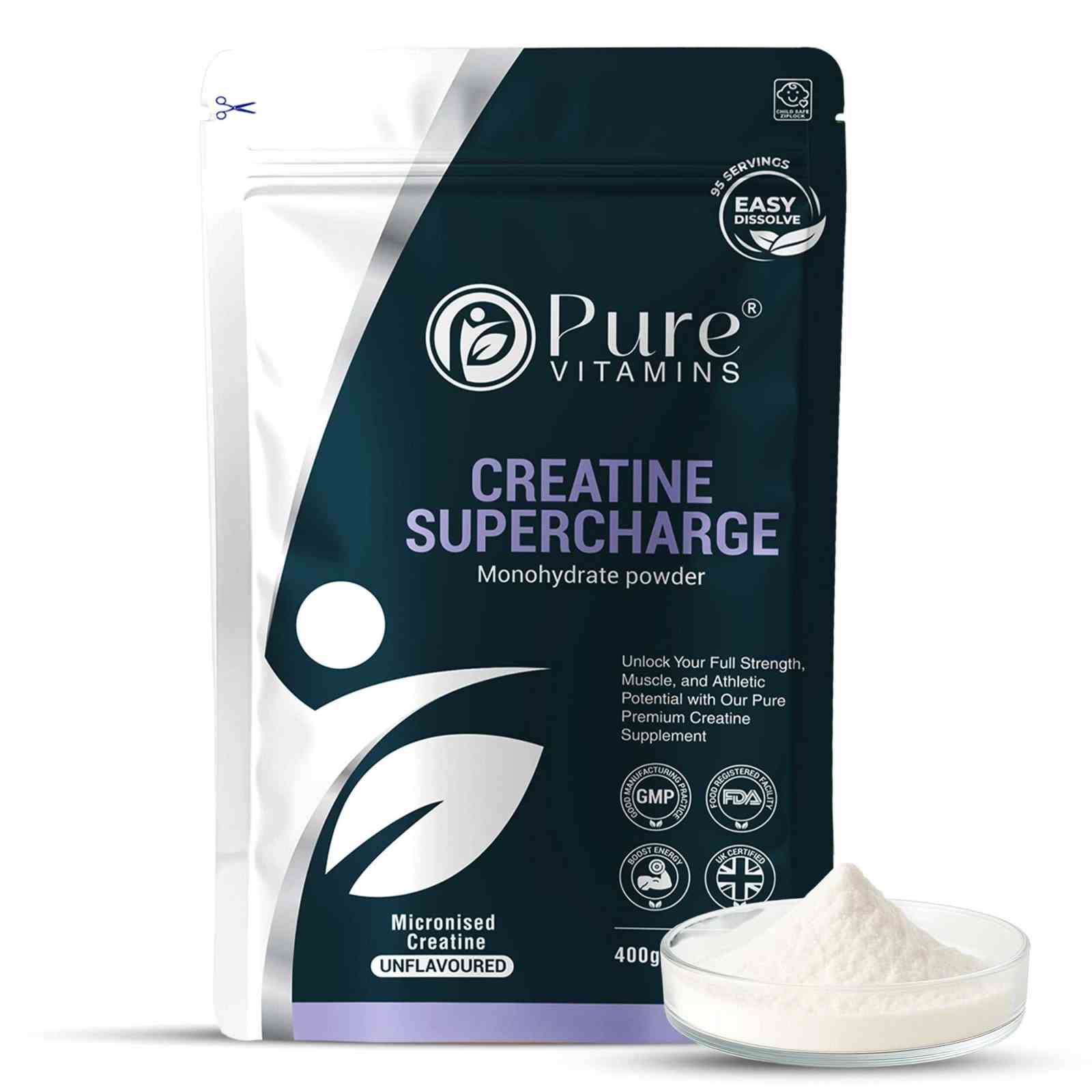
The honest summary: monohydrate is the well-evidenced standard, which is why our Micronised Creatine Monohydrate uses it.
What "micronised" means
Micronised creatine is simply monohydrate processed into a finer powder. The only practical difference is that it disperses and mixes into liquid more easily — it's the same creatine, just a more convenient texture. It doesn't change what creatine is or does; it's a formulation nicety.
The takeaway
Creatine is a compound your body already makes and stores in muscle, topped up modestly by diet. Monohydrate is the well-studied, cost-effective standard form; HCl is a pricier, less-studied alternative; micronised just means it mixes better. For a clean, evidence-standard choice, our Micronised Creatine Monohydrate covers it. For the wider picture, see our guide on creatine for women over 40.
Food supplements should not be used as a substitute for a varied, balanced diet and a healthy lifestyle. If you are pregnant, breastfeeding, taking medication or managing a medical condition, speak to your GP or pharmacist before starting a new supplement. Signed, Dr. Miron, Founder of Pure Vitamins UK.


