

Creatine has moved well beyond the gym, and one of the fastest-growing groups of people exploring it is women over 40. This guide looks honestly at creatine for women over 40 — what creatine is, what researchers are exploring, and how to use it — without overstating what's known or permitted.
An honest note up front: creatine is not a vitamin or mineral, and it carries no authorised health claims in the UK. That means no brand can legally tell you it builds muscle, boosts strength or sharpens the mind. What we can do is explain what creatine is, what the research is exploring, and the practical usage and safety facts — which is genuinely most of what people want to know.
What creatine actually is
Creatine is a compound your body already makes (from the amino acids glycine, arginine and methionine) and stores mainly in muscle, where it's involved in energy production. You also get small amounts from foods like red meat and fish. A supplement simply tops up those stores. We explain the basics in what creatine is and how the body makes it.
Why the interest among women over 40?
Two honest, factual reasons. First, women generally have lower baseline creatine stores than men, so the topic has particular relevance. Second, researchers have become increasingly interested in creatine in the context of women's health through midlife — including muscle, bone and cognition. It's important to be precise here: this is an area of active research, not a set of proven outcomes or authorised claims. We think the honest framing is "this is being studied with interest" — not a promise.
What we can't claim — and won't
You'll see a lot of bold marketing aimed at this exact audience: creatine "for menopause muscle loss", "for belly fat", "for brain fog". We won't make those claims, because creatine carries no authorised health claims and because honest framing matters more than a quick sell. If creatine interests you for any health concern around midlife, that's a great conversation to have with your GP — who can give you advice specific to you.
The genuinely useful, claim-free facts
Here's what's actually worth knowing, and all of it is composition, usage or safety — no claims required:
- Form: creatine monohydrate is the most-studied form; micronised simply means a finer powder that mixes more easily. Ours is micronised creatine monohydrate.
- Dose & timing: consistency matters more than timing — covered in our creatine timing guide.
- Safety: creatine is one of the most-studied supplements, and we tackle the common myths (kidneys, hair loss, "is it a steroid") in our creatine myths piece.
The takeaway
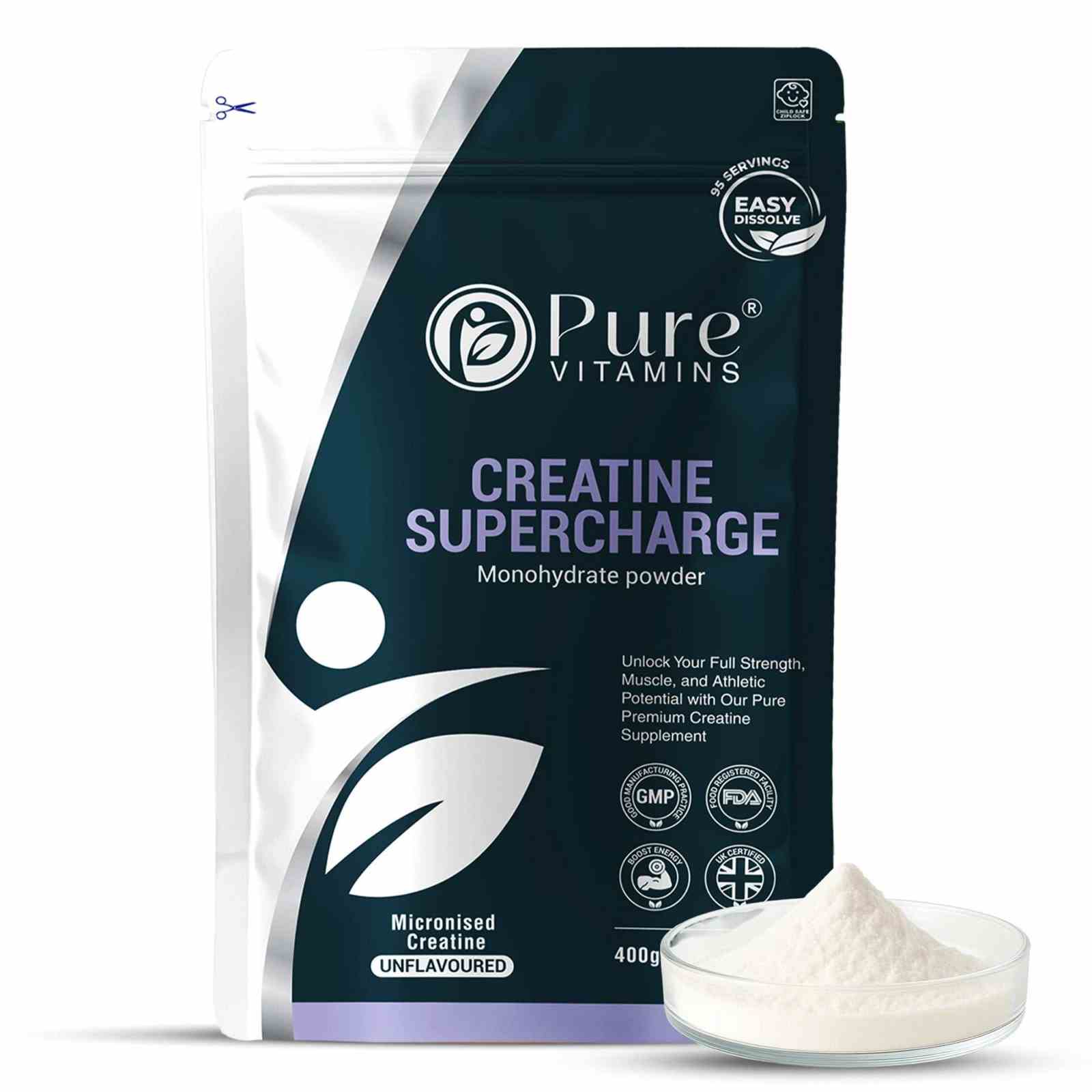
Creatine is a well-studied compound your body already makes, and there's genuine research interest in it for women through midlife — but it carries no authorised UK health claims, so we describe it on composition, usage and safety, not promises. If that honest, no-hype approach suits you, our Micronised Creatine Monohydrate is a clean, simple option. For any health-specific questions, talk to your GP.
Food supplements should not be used as a substitute for a varied, balanced diet and a healthy lifestyle. If you are pregnant, breastfeeding, taking medication or managing a medical condition, speak to your GP or pharmacist before starting a new supplement. Signed, Dr. Miron, Founder of Pure Vitamins UK.

