


Reviewed and updated: 23 July 2026
B12 and energy is one of the most over-marketed pairings in the supplement aisle, so here is the honest answer first: vitamin B12 genuinely contributes to normal energy-yielding metabolism and to the reduction of tiredness and fatigue, but it is not a stimulant and it will not give a noticeable lift if your levels are already healthy. This guide explains what is real, what is myth, and who actually benefits.
B12 and energy: the quick answer
- The real science: vitamin B12 contributes to normal energy-yielding metabolism and to the reduction of tiredness and fatigue.
- The honest caveat: topping up when you are already replete does not create extra energy; B12 is water-soluble and the surplus is largely excreted.
- Who actually benefits: people who are low or deficient, especially vegans, many older adults, and long-term metformin or acid-suppressant users.
- If you are persistently tired: see your GP. Fatigue has many causes and a simple blood test can show whether B12 is one of them.

What vitamin B12 actually does
Vitamin B12 (cobalamin) is a water-soluble vitamin involved in several core processes. It genuinely contributes to normal energy-yielding metabolism, to the reduction of tiredness and fatigue, to the normal functioning of the nervous system, to normal red blood cell formation, to normal homocysteine metabolism and to normal psychological function. Energy-yielding metabolism means B12 is part of the biochemistry by which the body releases energy from food. It is a metabolic role, not a quick chemical jolt (NIH Office of Dietary Supplements, Vitamin B12 fact sheet).
Does B12 give you an instant energy boost? The myth
Honestly, no, not in the way the marketing implies. B12 is not a stimulant. If you are not deficient, taking more will not produce a surge of energy, and there is no good evidence that supplementing already-replete people improves energy or stamina; the body simply excretes what it does not need. Where B12 genuinely helps with tiredness is when someone is low or deficient: correcting that shortfall supports normal energy-yielding metabolism and can ease the fatigue the deficiency was causing (NIH Office of Dietary Supplements, Vitamin B12 fact sheet). The honest framing is correcting a shortfall, not supercharging a topped-up system. For more, see which nutrients help with tiredness and fatigue.

Why is B12 added to energy drinks?
Largely marketing and association. B12's genuine link to energy-yielding metabolism makes it an appealing ingredient to print on an energy-drink label, even though the actual lift from those drinks comes mostly from caffeine and sugar. The B12 is there for the energy story as much as anything, and understanding that helps you see past the hype.
Who is most at risk of low B12?
B12 occurs naturally almost only in animal foods, and absorbing it depends on stomach acid and a healthy gut, so several groups are more likely to run low:
- Vegans and strict vegetarians: a plant-only diet provides little or no B12 unless fortified foods or a supplement are used, and dietary B12 shortfall is a recognised and rising cause of deficiency (Kramarz et al., 2023).
- Many older adults: reduced stomach acid and conditions such as atrophic gastritis lower how much B12 is absorbed from food.
- Long-term metformin users: a randomised placebo-controlled trial found metformin lowered B12 concentrations by about 19% on average and increased the risk of deficiency over time, which is why monitoring is often advised (de Jager et al., 2010).
- Long-term acid-suppressant users: proton pump inhibitors and H2 blockers reduce stomach acid and can lower B12 absorption over time.
- People with pernicious anaemia, coeliac or Crohn's disease, or who have had gastric or bariatric surgery: absorption is impaired and medical management is needed.
Signs that B12 might be low
Symptoms are real but non-specific, which is exactly why you should not self-diagnose. They can include persistent tiredness, breathlessness, a sore or red tongue, mouth ulcers, pins and needles or tingling, low mood and difficulty concentrating. Because so many other things cause these, the right step is a blood test rather than assuming B12 is the answer. For a fuller list see B12 deficiency and who is at risk.

Natural food sources of B12
B12 is found in meat, fish, shellfish, eggs and dairy. Plant foods do not reliably contain it, so people eating little or no animal produce should rely on fortified foods such as some plant milks, breakfast cereals and nutritional yeast, or take a supplement. This is the practical reason a dedicated B12 is so commonly recommended for vegans, as I cover in do vegans need a B12 supplement.
The forms: methyl, adenosyl, cyano and hydroxo
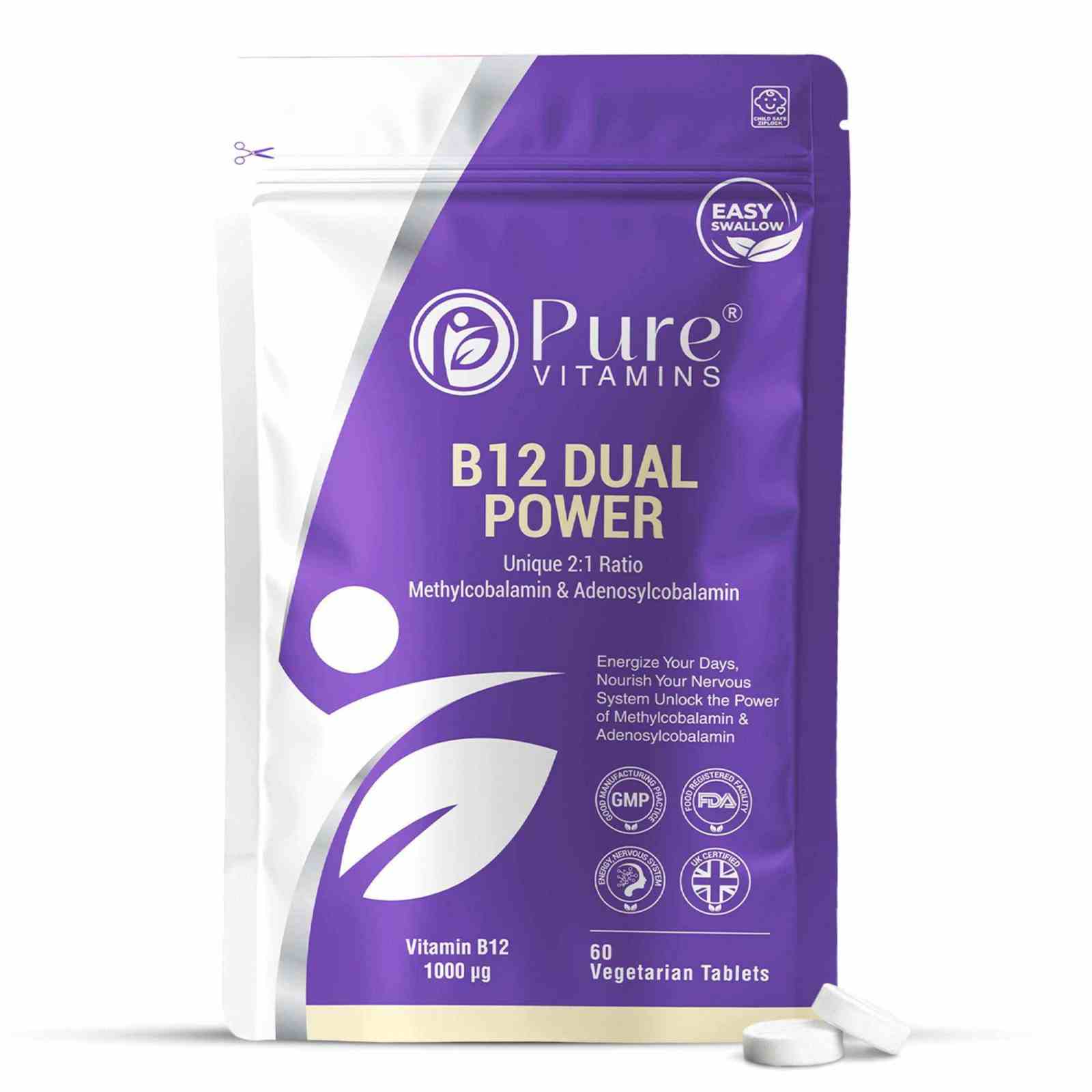
Supplements use different forms of B12. Cyanocobalamin is the most common and very stable; methylcobalamin and adenosylcobalamin are the two forms the body uses directly. Our active-form B12 supplies both methylcobalamin and adenosylcobalamin. For a plain comparison see B12 forms explained.
How much B12, and can you take too much?
Adults need only a small daily amount, but absorption from a single dose is limited, which is why supplements often contain far more than the daily requirement. B12 has no Tolerable Upper Intake Level set, and it has very low toxicity because it is water-soluble and excess is excreted. That said, more is not better once you are replete; a sensible supplement simply ensures adequacy (NIH Office of Dietary Supplements, Vitamin B12 fact sheet).

B12 or a B complex for energy?
It depends on what you are addressing. A dedicated B12 is the sensible choice if your concern is specifically B12, for example if you are vegan, older, or have been told your level is low, because it lets you take a meaningful amount of the active forms. A B complex provides the whole B-vitamin family in smaller amounts and is reasonable for broad coverage; several B vitamins, including B1, B2, B3, B6 and B12, also contribute to normal energy-yielding metabolism. I compare the two in is B12 or B complex better for energy.
A few cautions worth knowing
If you take metformin or long-term acid-suppressing medicines, it is worth discussing B12 monitoring with your GP. Folic acid supplements can mask the anaemia of B12 deficiency while nerve-related effects continue, so the two are best considered together. Very high doses of biotin, sometimes found in hair-and-nail products, can interfere with some laboratory blood tests including certain B12 assays, so tell the person taking your blood about any supplements. If you are pregnant, breastfeeding or managing a medical condition, check with your GP or pharmacist before starting anything new.
The takeaway
B12 genuinely contributes to normal energy-yielding metabolism and the reduction of tiredness and fatigue, but it is not a stimulant and will not boost energy in someone who is not low. Its real value is correcting a shortfall, which is why at-risk groups benefit most. For the full picture see the vitamin B12 guide, or browse the wider Pure Vitamins range.
Frequently asked questions
Does B12 give you energy? B12 contributes to normal energy-yielding metabolism and the reduction of tiredness and fatigue, but it only eases tiredness when you are actually low; it is not a stimulant for people who are already replete.
Who benefits most from a B12 supplement? Vegans and strict vegetarians, many older adults, and long-term metformin or acid-suppressant users, who are the groups most likely to run low.
Can you take too much B12? B12 has no set upper limit and very low toxicity because it is water-soluble, but there is no benefit to taking more once you are replete.
Should I take B12 or a B complex for energy? A dedicated B12 suits a specific B12 concern; a B complex gives broad coverage of the B-vitamin family in smaller amounts.
Food supplements should not be used as a substitute for a varied, balanced diet and a healthy lifestyle. If you are persistently tired, see your GP, as fatigue has many causes and a blood test can check whether B12 is involved. If you are pregnant, breastfeeding, taking medication or managing a medical condition, speak to your GP or pharmacist before starting a new supplement.
Dr. Miron, Founder of Pure Vitamins UK.

