

If you've shopped for a B12 supplement, you'll have seen confusing names: cyanocobalamin, methylcobalamin, adenosylcobalamin, hydroxocobalamin. This guide explains the different B12 Forms clearly — what "active" means, the cyanide question, and which form to look for. There is more detail in what hydroxocobalamin is.
For transparency: B12 is a vitamin with authorised health claims (energy-yielding metabolism, reduction of tiredness and fatigue, nervous-system function). This article is about the chemical forms — a composition matter — and applies the same authorised wording, never "instant energy".
The four B12 Forms you'll see
- Cyanocobalamin — synthetic, very stable and cheap; the most common form in budget supplements and fortified foods. The body converts it into the active forms.
- Methylcobalamin — one of the two "active" (coenzyme) forms the body uses directly, particularly associated with the nervous system.
- Adenosylcobalamin — the other active form, used in the mitochondria (the cell's energy machinery).
- Hydroxocobalamin — a natural form often used in B12 injections given by doctors; the body converts it to the active forms.
What does "active form" mean?
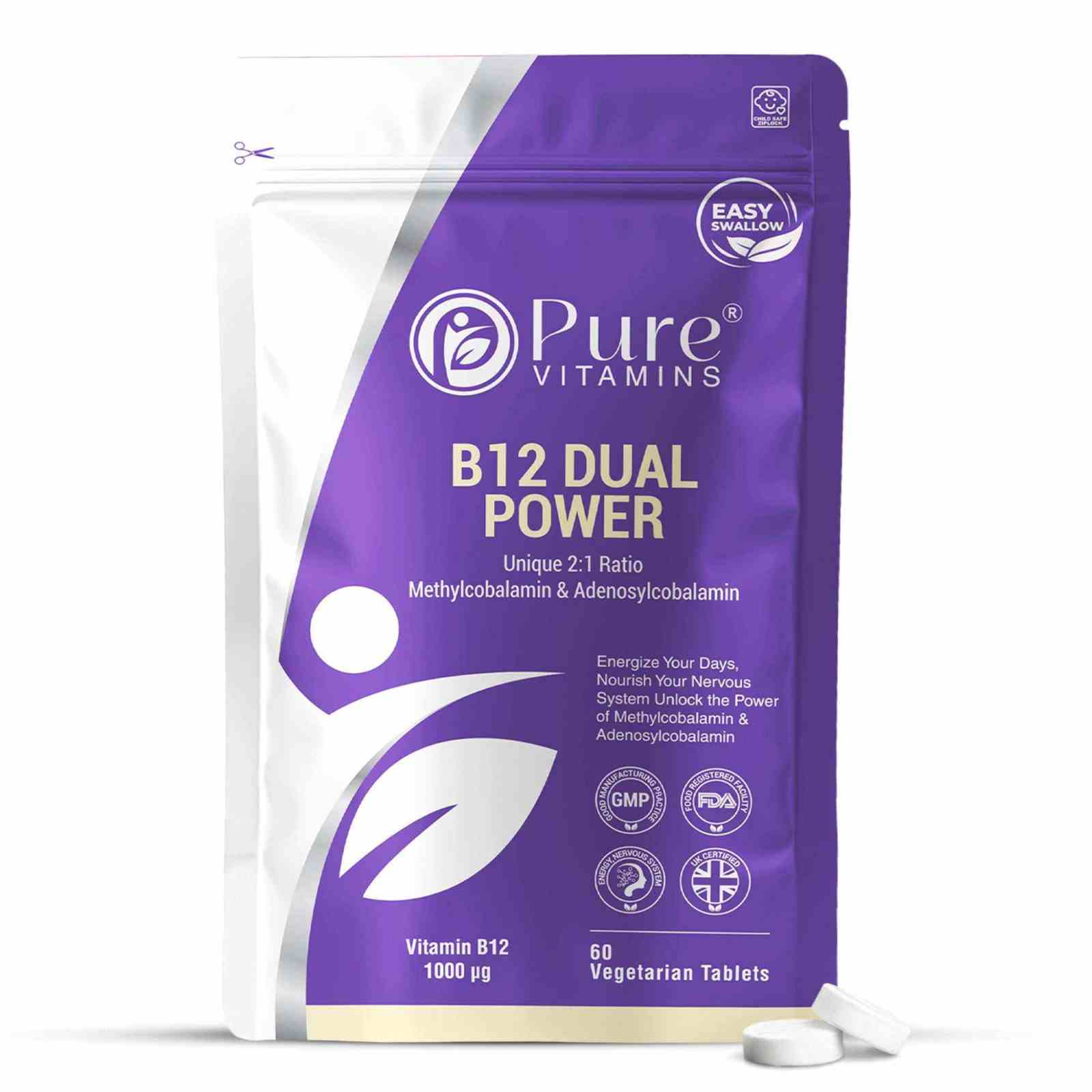
B12 has to be in a specific chemical form to be used by the body's enzymes. Methylcobalamin and adenosylcobalamin are the two active (coenzyme) forms — the shapes B12 actually works in. Other forms (cyanocobalamin, hydroxocobalamin) must first be converted by the body into these active forms. So an "active form" supplement provides B12 in the body-ready state directly. This is why our Vitamin B12 combines both active forms — covering the nervous-system-associated and energy-machinery forms together.
The cyanide question: is cyanocobalamin safe?
People are sometimes alarmed to learn cyanocobalamin contains a "cyanide" group. Honestly: for healthy people at normal supplement doses, the amount of cyanide released when the body converts cyanocobalamin is tiny — far below anything of concern, and the form has been used safely for decades. So it's not a safety scare. The reasonable argument for active forms isn't toxicity; it's simply that they're body-ready and don't require the conversion step — which some people, particularly older adults, may do less efficiently.
Why is cyanocobalamin the most common form?
Simple economics and chemistry: cyanocobalamin is the most stable and cheapest to manufacture, so it dominates budget supplements and food fortification. Stability and cost — not superiority — are why it's everywhere. Active forms cost more to produce, which is part of why they're seen as a premium choice.
Which form is best for vegans?
All these B12 Forms are produced by bacterial fermentation, not from animals, so cyanocobalamin and the active forms can both be vegan-suitable — always check the specific product is labelled vegan. The form question (active vs cyanocobalamin) is separate from the vegan question. For who needs B12 most, see B12 deficiency and who's at risk.
The takeaway
Cyanocobalamin is the cheap, stable, common form (and safe at normal doses); methylcobalamin and adenosylcobalamin are the two body-ready active forms; hydroxocobalamin is the injection form. An active-form supplement skips the conversion step — the honest reason to choose one. Our Vitamin B12 uses both active forms. For the full picture, see our vitamin B12 guide, and if you also take a B complex, the overlap between the two products is set out in can you take vitamin B and B12 together.
Food supplements should not be used as a substitute for a varied, balanced diet and a healthy lifestyle. If you are pregnant, breastfeeding, taking medication or managing a medical condition, speak to your GP or pharmacist before starting a new supplement. Signed, Dr. Miron, Founder of Pure Vitamins UK.
