

Reviewed and updated: 23 July 2026
B12 deficiency is more common than many people realise, especially in certain groups, and the short answer is this: the signs are real but non-specific, the causes split into too little in the diet and too little absorbed, and a suspected deficiency belongs with your GP and a blood test rather than a supplement label. This guide explains the signs, the causes, who is most at risk, and how low B12 is checked and put right. One thing to be clear about from the start: B12 deficiency is a medical matter, so this article is here to help you understand the topic and know when to seek help, not to replace a diagnosis.
B12 deficiency: the quick answer
- Signs: tiredness, breathlessness, a sore tongue, pins and needles, low mood and poor concentration, all non-specific.
- Causes: low dietary intake (animal foods only) or reduced absorption (age, certain medicines, gut conditions).
- Most at risk: vegans and vegetarians, many older adults, long-term metformin or acid-suppressant users, and people with pernicious anaemia or gut and bariatric-surgery histories.
- What to do: do not self-diagnose. Ask your GP for a blood test, then address the cause, whether that is diet, a supplement, or medical input.

Recognised signs associated with low B12
Because B12 contributes to normal red blood cell formation and to the normal functioning of the nervous system, a shortfall can be linked to a range of signs: tiredness and fatigue, breathlessness, a particular type of anaemia, a sore or red tongue, mouth ulcers, and sometimes nerve-related symptoms such as tingling or pins and needles, alongside low mood and difficulty concentrating. I am deliberately careful here, because these signs are non-specific and overlap with many other causes. They point to "get this checked," not "self-diagnose and self-treat." Your GP can tell the difference with a blood test, and persistent or progressive nerve symptoms should be looked at promptly (NIH Office of Dietary Supplements, Vitamin B12 fact sheet).
What causes low B12?
The two broad routes are intake and absorption:
- Low dietary intake: B12 occurs almost entirely in animal foods, so plant-based diets without fortified foods or a supplement are a common and rising cause of shortfall (Kramarz et al., 2023).
- Reduced absorption: even with enough in the diet, the body may not absorb it well. Absorbing B12 depends on stomach acid and a protein called intrinsic factor, and this can falter with age, with some long-term medicines, and with conditions such as pernicious anaemia or certain gut disorders.

Who is most at risk?
- Vegans and vegetarians: the clearest at-risk group, because a plant-only diet supplies little or no B12 unless fortified foods or a supplement are used.
- Older adults: reduced stomach acid and conditions such as atrophic gastritis lower absorption with age.
- Long-term metformin users: a randomised placebo-controlled trial found metformin lowered B12 by about 19% on average and raised the risk of deficiency over time, so monitoring is often advised (de Jager et al., 2010).
- Long-term acid-suppressant users: proton pump inhibitors and H2 blockers reduce the stomach acid needed to release B12 from food.
- People with pernicious anaemia, coeliac or Crohn's disease, or a history of gastric or bariatric surgery: absorption is impaired and medical management is needed.
How is B12 deficiency diagnosed?
Diagnosis is a GP matter, not a guess from symptoms or a supplement label. A blood test typically measures serum B12, sometimes alongside related markers such as folate, full blood count and, in some cases, methylmalonic acid or active B12, to build an accurate picture. Two practical points worth knowing: folic acid supplements can mask the anaemia of B12 deficiency while nerve effects continue, so the two are considered together; and very high doses of biotin, common in some hair-and-nail products, can interfere with certain B12 laboratory assays, so mention any supplements to the person taking your blood.

Can low B12 cause hair changes?
This is a common search. B12 has a role in the process of cell division, and severe deficiencies of various nutrients can be associated with hair changes, but B12 specifically is not a proven remedy for hair loss, and hair changes have many causes. The honest answer is that if you have hair concerns alongside other symptoms, that is a reason to see your GP and get the underlying picture checked, rather than assuming B12 and self-treating.
Which foods are high in B12?
B12 is found in meat, fish, shellfish, eggs and dairy. There is very little reliable B12 in plant foods, although some is added to fortified products such as certain plant milks, breakfast cereals and nutritional yeast. This is exactly why plant-based eaters are advised to use fortified foods or a supplement, as diet alone rarely covers it. I go into this in do vegans need a B12 supplement.
How is low B12 put right?
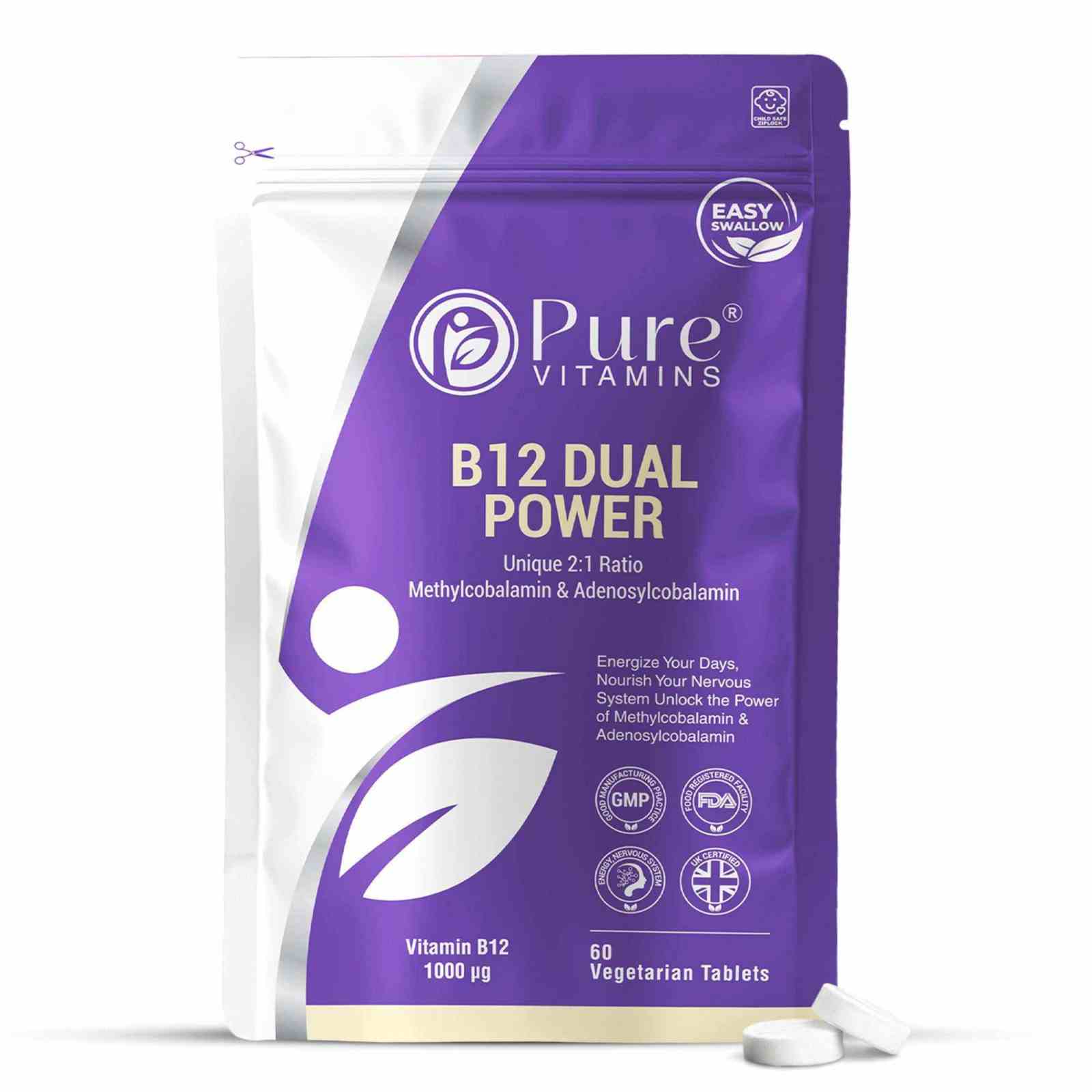
- Tablets and capsules: convenient and effective for everyday supplementation and for topping up a dietary shortfall; our active-form B12 uses methylcobalamin and adenosylcobalamin.
- Sprays and sublingual: an alternative format some people prefer; evidence that they are meaningfully superior to tablets is mixed.
- Injections: a medical option arranged by a doctor, usually for diagnosed deficiency or an absorption problem such as pernicious anaemia, and a clinical decision rather than a lifestyle choice.
How quickly things improve depends on the cause and severity, which is another reason to work with your GP rather than self-manage. For a plain comparison of forms see B12 forms explained.

Keeping B12 topped up if you are at risk
If you fall into an at-risk group, the practical approach is to ensure a steady, adequate intake through fortified foods or a daily supplement, and to keep an eye on it with your GP if you take metformin or long-term acid-suppressing medicines. A sensible everyday B12 simply maintains adequacy; it is not a substitute for medical care when a genuine deficiency is suspected.
The takeaway
Low B12 is common in vegans, older adults and people with absorption issues, and its signs are real but non-specific, so a suspected deficiency belongs with your GP and a blood test rather than guesswork. For everyday supplementation, a quality active-form B12 like ours is a sensible choice. For the full picture see the vitamin B12 guide, the energy question in B12 and energy, or browse the wider Pure Vitamins range.
Frequently asked questions
What are the signs of B12 deficiency? Tiredness, breathlessness, a sore tongue, mouth ulcers, pins and needles, low mood and poor concentration, though all are non-specific and need a blood test to confirm.
Who is most at risk of low B12? Vegans and vegetarians, many older adults, long-term metformin or acid-suppressant users, and people with pernicious anaemia or a gut or bariatric-surgery history.
How is B12 deficiency diagnosed? By a GP blood test measuring serum B12, sometimes with folate, full blood count and additional markers, not from symptoms or a supplement label.
Can diet alone fix low B12? If the cause is dietary, fortified foods or a supplement can help; if it is an absorption problem, medical treatment such as injections may be needed.
Food supplements should not be used as a substitute for a varied, balanced diet and a healthy lifestyle. Suspected B12 deficiency should be assessed by your GP, who can arrange a blood test; do not rely on supplements to self-manage a suspected deficiency. If you are pregnant, breastfeeding, taking medication or managing a medical condition, speak to your GP or pharmacist before starting a new supplement.
Dr. Miron, Founder of Pure Vitamins UK.
