

Milk thistle and dandelion are two herbs with deep roots in European and folk herbal tradition, and they are frequently combined, including in our own formula. They share more than a place on the label: both are members of the daisy family. This guide explains the botanical connection, what each plant contains, and the genuinely important practical points around allergies and medication interactions, which are the most useful part of this page.
Reviewed and updated: 24 July 2026

Milk thistle and dandelion: the plant family connection
Milk thistle (Silybum marianum) and dandelion (Taraxacum officinale) both belong to the Asteraceae, the daisy or aster family, which is why they have so often travelled together in traditional herbal preparations. Milk thistle in particular has been used in European herbalism for well over two thousand years, and dandelion is a long-standing folk remedy in its own right. Below I explain their plant relationship, what is in each, and the safety points genuinely worth knowing.
TL;DR
- Shared family: milk thistle and dandelion are both Asteraceae (daisy-family) plants.
- Milk thistle's key compounds: a group of flavonolignans called silymarin, with silybin the main one.
- Allergy note: a known daisy-family allergy (ragweed, marigold, chrysanthemum) may mean a higher chance of reacting.
- Most important point: milk thistle can affect how some medicines are handled, so check with your GP or pharmacist if you take any.
- Heritage: both are long-standing herbs in European and folk tradition, valued for their plant compounds.
A shared botanical family
Here is a connection most people miss. According to the published literature, milk thistle is a member of the Asteraceae, the large, widespread family that includes daisies, asters and sunflowers (Polyak, Ferenci and Pawlotsky, 2012, DOI), and dandelion sits in the same family. That shared lineage is why the two have travelled together in traditional herbalism, and it is directly relevant to the allergy note below.
What is in milk thistle: silymarin
Milk thistle's characteristic compounds come from its seeds. The extract, silymarin, is a mixture of structurally similar flavonolignans, principally silybin A and B, isosilybin A and B, silychristin and silydianin, together with the flavonoid taxifolin from which they derive (Riasova et al., 2021, DOI); silibinin specifically refers to a 1:1 mix of silybin A and B (Polyak et al., 2012, DOI). The European and US pharmacopoeias even define the expected proportions of these flavonolignans, which is why a quality extract states a standardised silymarin percentage. We go deeper in what silymarin is and the silymarin complex components.

What is in dandelion
Dandelion has a long history in folk herbalism, and different parts of the plant are used: the root is a source of inulin, a prebiotic fibre, while the leaf and root contain bitter sesquiterpene lactones and various polyphenols. For the detail, see what dandelion and dandelion root are.
Why our formula combines them
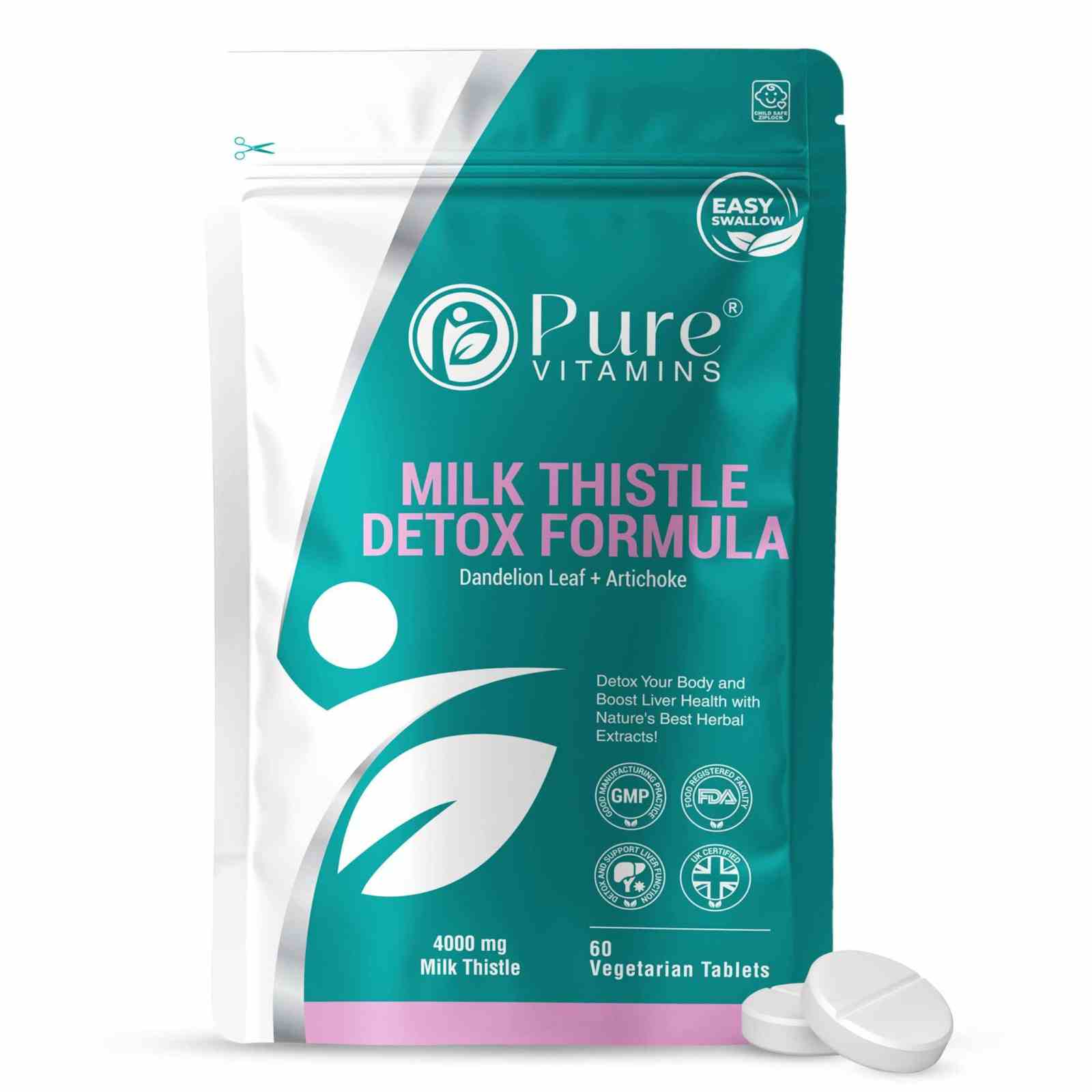
Our Milk Thistle with Dandelion & Artichoke brings together three botanicals with long, overlapping traditions of being used together, and as it happens artichoke (Cynara scolymus) is also a daisy-family plant. It is a trio rooted in heritage rather than hype. If you are working out how much to take, our guide to how much milk thistle a woman should take explains why the silymarin figure matters far more than the total herbal blend weight on the front of a bottle.

The important allergy point
Because milk thistle, dandelion and artichoke are all Asteraceae, people with a known allergy to other daisy-family plants, such as ragweed, marigolds or chrysanthemums, may be more likely to react to them. If that is you, it is worth knowing before you start, and worth raising with your GP or pharmacist. This is a genuine, practical safety fact rather than a scare.
Medication interactions: speak to your GP or pharmacist
This is the single most important reason to involve a professional. Milk thistle's flavonolignans interact with drug-transport proteins that move medicines in and out of cells, which is a recognised route for pharmacokinetic interactions between silymarin and certain drugs (Lynch et al., 2021, DOI). I am not going to list specific medicines here, because the right answer is individual: if you take any prescription medication, check with your GP or pharmacist before starting milk thistle or a milk-thistle-and-dandelion supplement. They can look at your specific medicines and advise you properly.
Who else should take particular care
- Pregnant or breastfeeding: speak to your GP before taking botanical supplements.
- People with a daisy-family allergy: as above.
- Anyone on regular medication: check for interactions first.
- Anyone with a health condition, particularly involving the liver or gallbladder, where professional advice should come first.

How our milk thistle is formulated
Our Milk Thistle with Dandelion & Artichoke uses a standardised milk thistle extract alongside the two companion botanicals, chosen for their shared heritage. It is formulated in the UK and tested for purity and heavy metals at our GMP-certified facility. For more background, see our milk thistle composition and traditional use guide, or browse the range on the Pure Vitamins UK home page.
Frequently asked questions
Are milk thistle and dandelion related?
Yes. Both belong to the Asteraceae, the daisy or aster family, which also includes artichoke, ragweed and chrysanthemum. That shared family is why they are traditionally paired and why a daisy-family allergy is worth noting.
Can you take milk thistle and dandelion together?
They are commonly combined in traditional formulas. Follow the product label, and if you take any medication or are pregnant or breastfeeding, check with your GP or pharmacist first.
Does milk thistle interact with medications?
It can. Milk thistle's flavonolignans interact with drug-transport proteins, a recognised route for interactions with some medicines. If you take any prescription medication, speak to your GP or pharmacist before starting.
Who should avoid milk thistle and dandelion?
Anyone with a known daisy-family allergy should be cautious, and pregnant or breastfeeding women, people on regular medication, and those with a liver or gallbladder condition should seek professional advice first.
Sources retrieved from the published literature; see linked DOIs above. Composition and interaction findings are paraphrased as science. Food supplements should not be used as a substitute for a varied, balanced diet and a healthy lifestyle. If you are pregnant, breastfeeding, taking medication or managing a medical condition, speak to your GP or pharmacist before starting a new supplement, particularly given milk thistle's potential to interact with some medicines. Signed, Dr. Miron, Founder of Pure Vitamins UK.
