
Milk thistle is one of the oldest botanicals in the herbal world, a purple-flowered Mediterranean thistle that people have gathered and used for well over two thousand years. This guide does what a lot of milk thistle content skips: it explains the plant honestly, by what it actually contains and how it has traditionally been used, so you can judge a product on real substance.
Reviewed and updated: 24 July 2026

Milk thistle: composition and traditional use
Milk thistle is a Mediterranean daisy-family plant whose seeds contain a complex of compounds called silymarin, and it carries over two millennia of traditional herbal use. In this guide I will walk you through the plant itself, the silymarin complex inside its seeds, why the standardised percentage on labels varies, its long heritage, and the safety points genuinely worth knowing.
TL;DR
- Plant: Silybum marianum, a daisy-family (Asteraceae) plant; the seed is the part used.
- Key compounds: silymarin, a complex of flavonolignans (silybin is the main one).
- Standardisation: labels often state a silymarin percentage; pharmacopoeias define the expected make-up.
- Heritage: traditionally used for roughly 2,000 years, valued as a herbal staple.
- Good to know: as a daisy-family plant it can affect people with related allergies, and it can interact with some medicines.
What milk thistle is
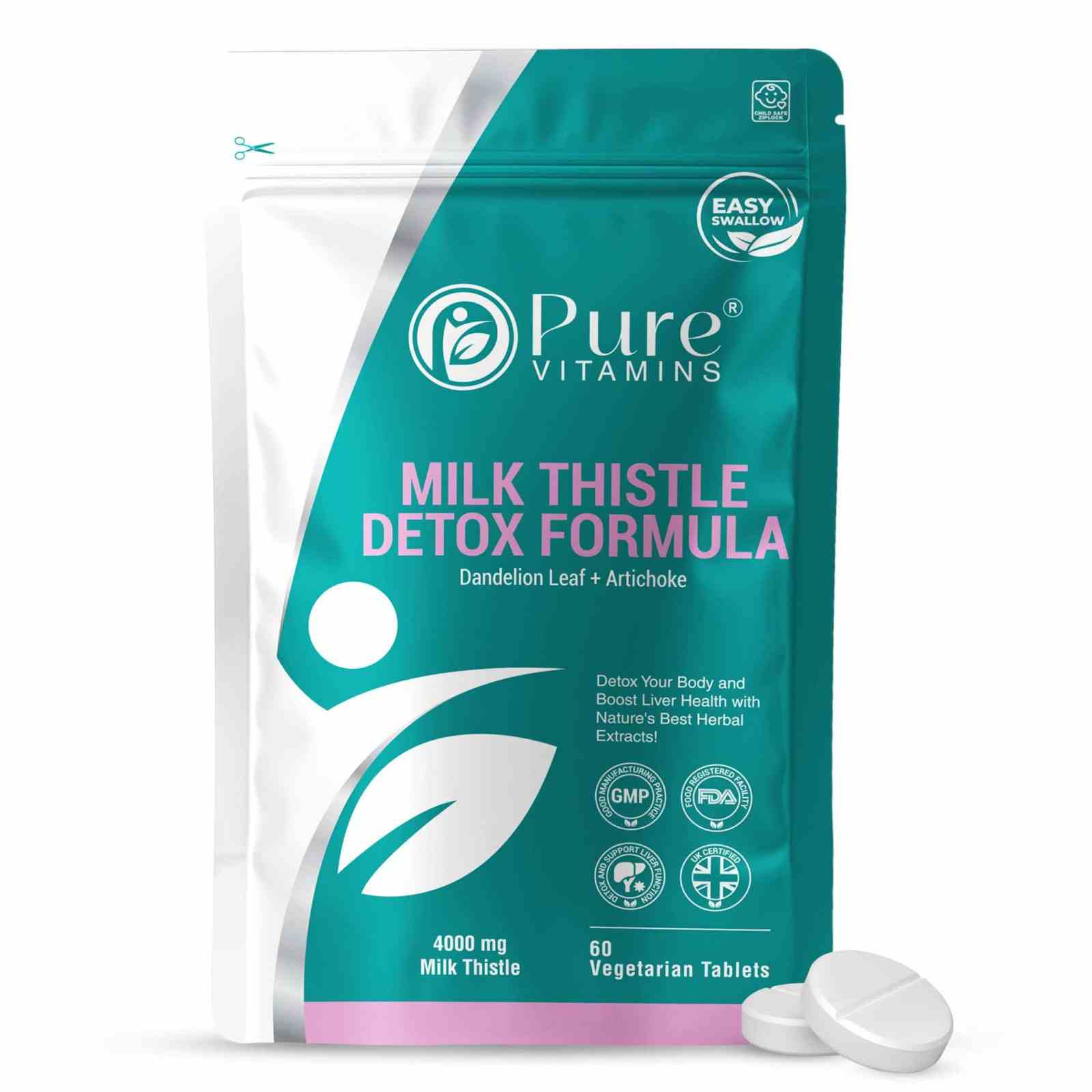
Milk thistle (Silybum marianum) is a flowering plant in the Asteraceae, the daisy family, native to the Mediterranean and recognisable by its purple flowers and distinctive white-veined leaves. The part used in supplements is the seed, sometimes called the fruit, where its characteristic compounds are concentrated, a point we expand in what part of milk thistle is used. Our Milk Thistle uses a standardised seed extract.
What is actually in it: silymarin
The compound milk thistle is known for is silymarin, which is not a single substance but a complex of related flavonolignans extracted from the seeds. According to the published literature, the main flavonolignans are silybin A and B, isosilybin A and B, silychristin and silydianin, derived from the flavonoid taxifolin, with silybin (silibinin) the principal one (Polyak, Ferenci and Pawlotsky, 2012, DOI). The European and US pharmacopoeias define the expected proportions of these flavonolignans (Riasova et al., 2021, DOI), which is exactly what a label means when it states "standardised to 80% silymarin." We break the complex down in what silymarin is and the silymarin complex components.

Why the silymarin percentage varies
Silymarin content is not fixed in the raw plant: a study of wild milk thistle populations found seed silymarin ranging from about 2.3% to 7.7% depending on the population and growing conditions (Arampatzis, Karkanis and Tsiropoulos, 2018, DOI). That natural variation is precisely why a standardised extract matters: standardisation concentrates and normalises the silymarin level so each capsule is consistent, rather than leaving it to the variability of raw seed. We explain this in what standardised to 80% means.
Its long traditional use
Milk thistle has been used in traditional European herbal practice for over two thousand years, and that heritage is genuine and well documented. I think that history is worth telling honestly for what it is: a long tradition of people reaching for the plant, generation after generation. It is a story of heritage, and heritage is not the same as proof of a modern benefit, which is why I always keep the two clearly apart.
Why it is combined with dandelion and artichoke
Our formula pairs milk thistle with dandelion and artichoke, two other botanicals with their own long traditions that are frequently combined with milk thistle in herbal preparations, and which happen to be daisy-family plants too. It is a trio grounded in shared heritage. More in milk thistle and dandelion.

How people take it, and safety
Milk thistle is usually taken daily as a standardised extract in capsule or tablet form; follow the serving on the label, as more is not better. If you want the amounts actually used in research, our guide to how much milk thistle a woman should take sets out the studied silymarin ranges and why the milligrams of herb on the front of a bottle tell you so little. On safety, two points matter most. First, as a daisy-family plant, it may trigger reactions in people allergic to ragweed, marigold or chrysanthemum. Second, milk thistle's flavonolignans can interact with how some medicines are processed, so anyone on prescription medication should check with their GP or pharmacist first. Pregnant or breastfeeding women and people with a liver or gallbladder condition should also seek advice before use.
The honest way to think about milk thistle
Here is my straight advice. If you are drawn to milk thistle, take it as what it genuinely is: a traditional botanical with a long heritage and a well-characterised compound, in a quality, standardised form. Judge a product on its extract quality and its silymarin standardisation rather than on big promises. And for any genuine concern about your health, that is firmly a conversation for your GP.

How our milk thistle is formulated
Our Milk Thistle with Dandelion & Artichoke is a standardised seed extract alongside its two companion botanicals, chosen for their shared heritage. It is formulated in the UK and tested for purity and heavy metals at our GMP-certified facility. Browse the range on the Pure Vitamins UK home page.
Frequently asked questions
What part of milk thistle is used?
The seed (sometimes called the fruit), which is where the silymarin compounds are concentrated. Supplements use a standardised seed extract rather than the leaf or flower.
What is silymarin?
Silymarin is the complex of flavonolignans extracted from milk thistle seeds, including silybin A and B, isosilybin A and B, silychristin and silydianin, derived from taxifolin. Silybin is the main component.
What does "standardised to 80% silymarin" mean?
It means the extract has been concentrated and normalised so that 80% of it is the silymarin complex, giving a consistent level per capsule. Raw seed silymarin varies naturally, which is why standardisation matters.
Who should be careful with milk thistle?
As a daisy-family plant it may trigger reactions in people allergic to ragweed, marigold or chrysanthemum, and its compounds can interact with some medicines. Anyone on prescription medication, and those who are pregnant, breastfeeding or with a liver or gallbladder condition, should check with a GP or pharmacist first.
Sources retrieved from the published literature; see linked DOIs above. Composition findings are paraphrased as science. Food supplements should not be used as a substitute for a varied, balanced diet and a healthy lifestyle. If you are pregnant, breastfeeding, taking medication or managing a medical condition, speak to your GP or pharmacist before starting a new supplement. Any concerns about your health should be discussed with your GP. Signed, Dr. Miron, Founder of Pure Vitamins UK.
