
Milk thistle labels are full of numbers and terms that often go unexplained: "seed extract", "standardised to 80% silymarin", "30:1". This guide is a plain-English label literacy walkthrough — so you can read a milk thistle supplement properly and judge its quality.
For transparency: milk thistle is a botanical with no authorised health claims in the UK. This article helps you understand label terminology — a composition and quality matter — and makes no claim about what milk thistle does for health.
Which part of the plant: the seed
Good milk thistle supplements are made from the plant's seeds (sometimes called fruits), because that's where the silymarin complex is concentrated. A quality label will specify "seed extract". If a product is vague about which part of the plant it uses, that's less reassuring — the seed is the part that matters here.
"Standardised to 80% silymarin": what it means
This is the key phrase. Standardised means the extract has been processed and measured so that a guaranteed, consistent proportion of the active compound complex is present in every batch — commonly 80% silymarin. Without standardisation, the silymarin content of raw milk thistle powder can vary considerably from batch to batch. So "standardised to 80% silymarin" is a genuine quality signal: it tells you the content is controlled and consistent. (Silymarin itself — the complex of flavonolignans — is explained in what silymarin is.)
Extract ratios (like 30:1)
You may also see an extract ratio such as 30:1. This means a stated weight of raw plant material was concentrated down to one part extract — in this example, 30 parts seed to 1 part extract. A higher ratio indicates a more concentrated extract. Ratios and standardisation percentages describe concentration and consistency respectively; both are composition facts that help you compare products.
A quick label checklist
- "Seed extract" — the right part of the plant.
- Standardised silymarin % — ideally stated (e.g. 80%); a consistency guarantee.
- Extract ratio — if given, indicates concentration.
- Quality markers — made in a GMP-certified facility, tested for purity.
- Honest presentation — be wary of any milk thistle product making "detox", "cleanse" or liver-health claims, which aren't permitted in the UK and signal a brand that cuts corners.
Where our extract sits
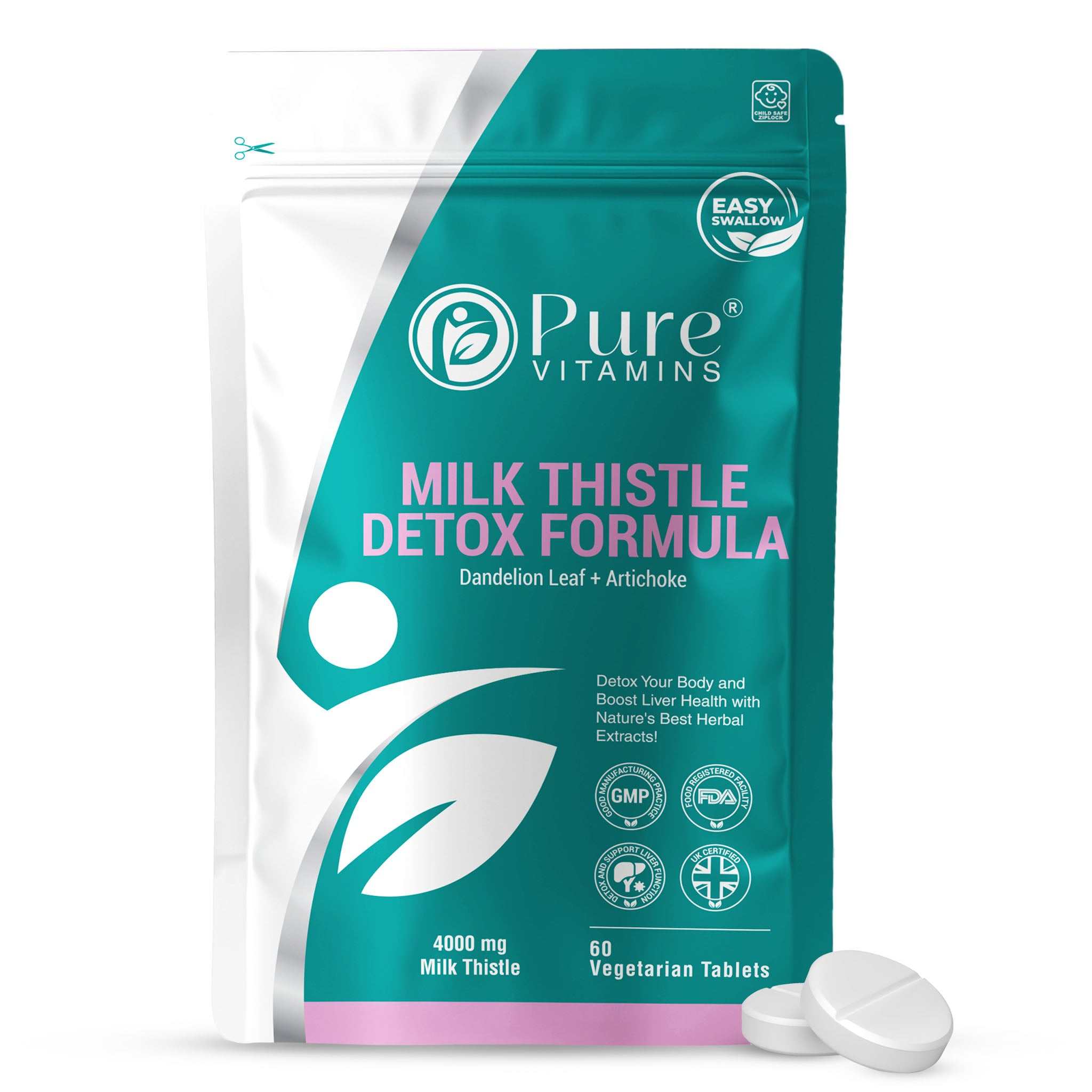
Our Milk Thistle with Dandelion & Artichoke is a standardised seed extract, presented transparently by its composition — the honest approach we take across the range.
The takeaway
To read a milk thistle label well: look for seed extract, a stated standardised silymarin percentage (often 80%), and an extract ratio if given — these are the real quality signals, and they're all composition facts. Steer clear of products leaning on "detox" promises. For the wider story, see our milk thistle guide.
Food supplements should not be used as a substitute for a varied, balanced diet and a healthy lifestyle. If you are pregnant, breastfeeding, taking medication or managing a medical condition, speak to your GP or pharmacist before starting a new supplement. Signed, Dr. Miron, Founder of Pure Vitamins UK.


