

Hydrolysed collagen is collagen that has been broken down into much smaller fragments called peptides, which makes it dissolve easily, even in cold drinks, and absorb more readily than intact collagen. In this guide I will walk through what hydrolysed collagen actually is, how it is made, the signature amino acids it provides, why it pairs so naturally with vitamin C, and what the research does and does not show, kept honest throughout.
Reviewed and updated: 24 July 2026
Hydrolysed collagen: the quick answer (TL;DR)
- What it is: collagen broken by hydrolysis into short peptides (collagen peptides), which dissolve and absorb more easily than whole collagen.
- What it provides: the signature amino acids glycine, proline and hydroxyproline, uncommon in most other proteins.
- Why vitamin C fits: collagen is a protein, and vitamin C is the nutrient that contributes to normal collagen formation, so the two are a natural pairing.
- Honest note: the human evidence for oral collagen and skin is still limited and mixed, so I describe it by composition, not by promises.

What is hydrolysed collagen?
Hydrolysed collagen, also called collagen peptides or collagen hydrolysate, is collagen that has been broken down through a process called hydrolysis into much smaller fragments. Whole collagen is a large, tough protein; hydrolysis, usually enzymatic, cuts it into short chains of amino acids called peptides, typically of low molecular weight in the region of 0.3 to 8 kilodaltons (Spiro and Lockyer, 2018, DOI). The practical upshot is a form that dissolves easily, including in cold liquids for powders, and is more readily digested and absorbed than intact collagen. Those three names, hydrolysed collagen, collagen peptides and collagen hydrolysate, all point to essentially the same thing.
Why hydrolyse collagen at all?
Native collagen is a rigid triple-helix protein with a large molecular weight of over 300 kilodaltons, which makes it hard for the body to absorb directly. When collagen is exposed to acid, heat or enzymes, it breaks into smaller peptides with lower molecular weights that are more easily digested and absorbed (Janssens-Bocker and colleagues, 2024, DOI). Hydrolysis is simply the step that turns a tough structural protein into a soluble, easy-to-take ingredient you can stir into coffee or a smoothie.
What amino acids are in collagen?
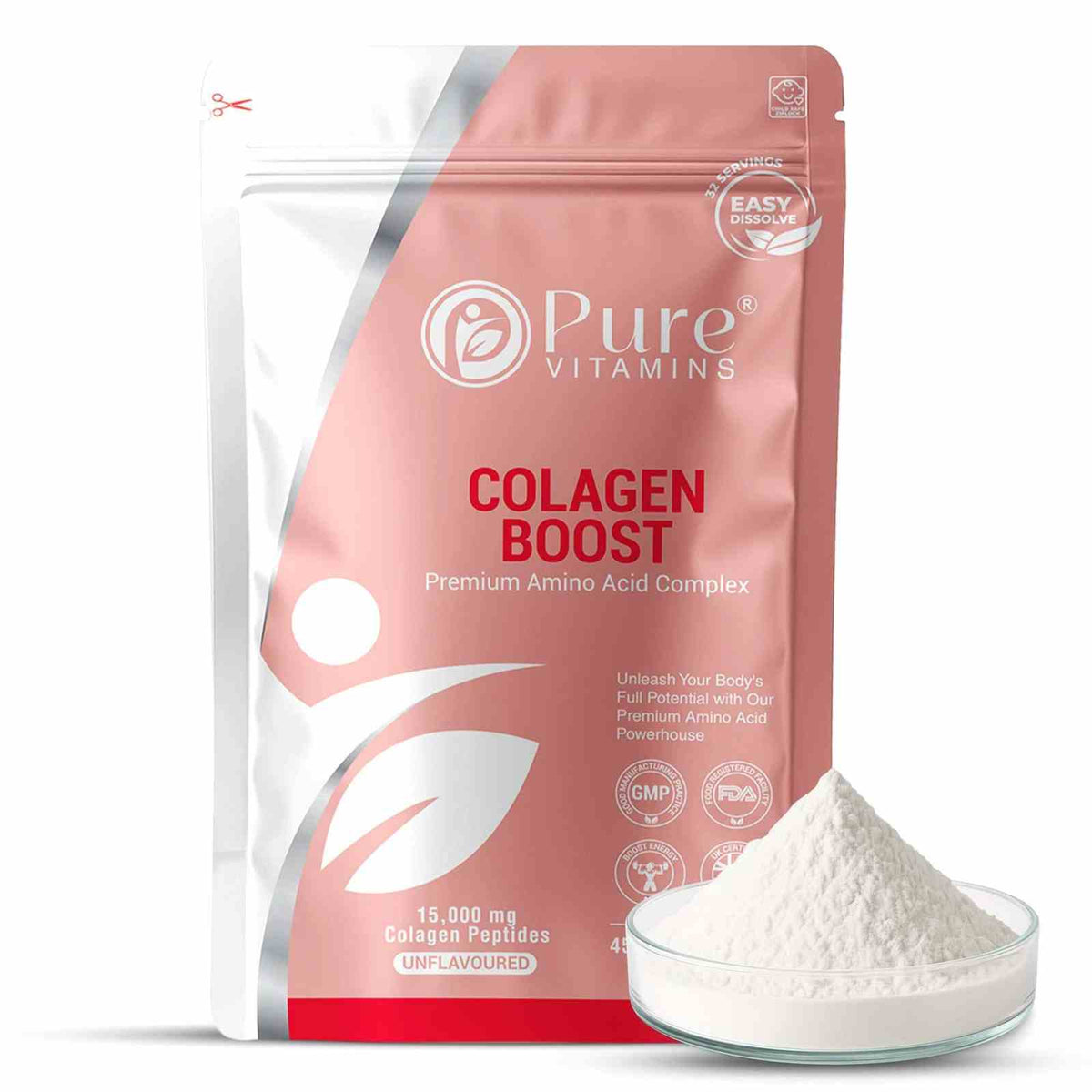
Collagen has a distinctive amino acid profile, especially rich in glycine, proline and hydroxyproline, which are relatively uncommon in most other dietary proteins. Hydroxyproline in particular is essentially unique to collagen and is even used in the lab to tell collagen apart from other proteins (Spiro and Lockyer, 2018, DOI; Felician and colleagues, 2018, DOI). Our Bovine Collagen Powder provides hydrolysed peptides delivering these signature amino acids. Those amino acids are what collagen is built from, which is why whether collagen counts as a vitamin is such a common question.

Is collagen a vitamin?
No, and it is a common mix-up worth clearing up. Collagen is a protein, in fact the most abundant structural protein in the body and around 30 percent of total body protein, found in skin, bones, tendons and connective tissue (Janssens-Bocker and colleagues, 2024, DOI). Vitamins and minerals are different categories of nutrient. Because collagen is a food protein, the nutrient that pairs so naturally with it is vitamin C, which the body genuinely needs to build collagen in the first place.
Why collagen and vitamin C belong together
Vitamin C contributes to normal collagen formation for the normal function of skin, bones, cartilage, gums, teeth and blood vessels. The biochemistry behind that is real and rather elegant: vitamin C is a required cofactor for the enzymes that hydroxylate proline and lysine in procollagen, the step that stabilises the collagen triple helix and lets the fibres cross-link properly (Reilly and colleagues, 2024, DOI). That is exactly why taking collagen alongside a source of vitamin C makes such sense, something I go into in collagen and vitamin C.
An honest note on the evidence
I would rather be straight with you than oversell. A review by the British Nutrition Foundation concluded that, while there are some small human trials and plausible mechanisms, the evidence for oral collagen supplements improving skin appearance is limited, not always consistent, and short of the large, high-quality randomised trials needed to draw firm conclusions (Spiro and Lockyer, 2018, DOI). Newer trials are more encouraging on skin hydration and elasticity, but the field is still maturing. That is why I present collagen on what it is made of, not on promises.
Type I and III, and marine versus bovine
Collagen comes in different types; supplements most often supply types I and III, the forms abundant in skin, bone and connective tissue. Collagen is always animal-derived, so it is never vegan, but the source varies. Marine collagen comes from fish, which suits pescatarians and people who avoid bovine or porcine sources for dietary or religious reasons. I compare the sources in marine vs bovine collagen and the formats in collagen powder vs capsules.

How to take it, and what to realistically expect
Hydrolysed collagen powder dissolves in hot or cold drinks, and most people take a scoop daily, often with their morning coffee or a vitamin C source given the biochemistry above. If you decide to try it, my honest advice is to give it a consistent run of a couple of months rather than judging it in a week, and to keep your expectations grounded: it is one supportive part of a wider routine, not a magic wand. Because collagen is animal-derived, anyone with a fish or bovine allergy should check the label and choose the source carefully. If you are pregnant or breastfeeding, take regular medication, or manage a health condition, have a quick word with your GP or pharmacist first. I cover practical use in collagen with hyaluronic acid and how to take it.
How our collagen is formulated
Our Bovine Collagen Powder provides hydrolysed type I and III peptides in an unflavoured, additive-free powder, and our Marine Collagen is the pescatarian-friendly option. Both are formulated in the UK and tested for purity and heavy metals at our GMP-certified facility. For the bigger picture, see our collagen buyer's guide, or browse the range on our home page.

Frequently asked questions
What is the difference between collagen and hydrolysed collagen?
Hydrolysed collagen is regular collagen that has been broken into much smaller peptides. Those peptides dissolve easily and are more readily digested and absorbed than large, intact collagen.
What amino acids does collagen provide?
Collagen is rich in glycine, proline and hydroxyproline. Hydroxyproline is essentially unique to collagen and is used to identify it in the lab.
Is collagen a vitamin?
No. Collagen is a structural protein, not a vitamin or mineral. Because it is a food protein, it pairs naturally with vitamin C, the nutrient the body needs to build collagen.
Should I take collagen with vitamin C?
Taking collagen with a source of vitamin C is sensible, because vitamin C is a required cofactor for the enzymes that build and stabilise collagen, and it contributes to normal collagen formation.
This article is for general information and composition education, not medical advice. Food supplements should not be used as a substitute for a varied, balanced diet and a healthy lifestyle. If you are pregnant, breastfeeding, taking medication or managing a medical condition, speak to your GP or pharmacist before starting a new supplement. Signed, Dr. Miron, Founder of Pure Vitamins UK.
