

Reviewed and updated: 24 July 2026
What's in lion's mane comes down to three headline groups of compounds: hericenones (concentrated in the fruiting body), erinacines (concentrated in the mycelium), and beta-glucans (the polysaccharides used as a marker of mushroom-extract quality). Lion's mane (Hericium erinaceus) is the striking, cascading white mushroom that looks a little like a frozen waterfall, and people in China, Japan and across East Asia have gathered, cooked and brewed it as a prized food and tonic for centuries. Alongside its signature molecules sit antioxidant phenolics, the sulphur-containing antioxidant ergothioneine, and a broad set of polysaccharides. Here is an honest breakdown of each. For a popular way it is taken day to day, see lion's mane coffee, and for the wider category see what a nootropic is.
TL;DR: what's in lion's mane
- What it is: an edible mushroom long valued in East Asian tradition, whose distinctive chemistry is hericenones, erinacines and beta-glucans, plus phenolics and ergothioneine.
- Who it's for: people who want to understand mushroom-extract labels and judge quality, rather than chase hype.
- Key point on evidence: most of the interesting findings come from laboratory and animal studies, not established human benefit. We keep that line clear throughout.
- Worth knowing: if you are pregnant, breastfeeding, have a mushroom allergy or take regular medication, have a quick word with a pharmacist first.

The signature compounds: hericenones and erinacines
Lion's mane is best known for two groups of compounds largely unique to the species. Hericenones are low-molecular-weight geranyl-resorcinol derivatives found mainly in the fruiting body (the visible mushroom), and erinacines are cyathane-type diterpenoids found mainly in the mycelium (the root-like network). More than 200 compounds have been catalogued in Hericium erinaceus, with around 25 distinct hericenones described in the chemistry literature, the first two isolated by Kawagishi and colleagues back in 1990 (Othman, Amen & Shimizu, 2026, doi.org/10.1002/cbdv.202502560).
In laboratory and animal models these molecules have been studied for their ability to influence nerve growth factor (NGF) synthesis (Raja-Razali et al., 2026, doi.org/10.1111/1750-3841.71026). That is genuinely interesting chemistry, but it is research-stage science: it does not establish a benefit in people, and we are not promising one.
Beta-glucans: the quality marker to look for
Like many mushrooms, lion's mane contains beta-glucans, a family of polysaccharides that are widely used as a marker of mushroom-extract strength and authenticity. A well-made extract will usually state its beta-glucan percentage, which is a far more meaningful signal than vague "mushroom powder" labelling. Beta-glucans are also the reason starch-heavy, grain-grown mycelium products can look impressive by weight while being low in the compounds people actually want.

The other constituents: phenolics, ergothioneine and polysaccharides
Beyond its signature molecules, lion's mane carries antioxidant phenolic compounds, the sulphur-containing antioxidant ergothioneine, and a broad set of water-soluble polysaccharides and heteropolysaccharides (Raja-Razali et al., 2026). It is also a genuine food: it provides dietary fibre, protein and minerals, and its high glutamic and aspartic acid content is what gives the fresh mushroom its savoury, umami flavour, the very quality that made it a delicacy on East Asian tables in the first place.
Why fruiting body vs mycelium matters
Because hericenones and erinacines concentrate in different parts of the organism, the part used changes the compound profile. That is exactly why "fruiting body vs mycelium" is one of the most common questions buyers ask, and we cover it in depth in fruiting body vs mycelium. As a rule of thumb, the fruiting body is the prized part for most concentrated extracts, and a good label tells you which part was used and how concentrated the extract is.
What the research actually shows (and doesn't)
Here is the honest position. The chemistry of lion's mane is well described, but the human evidence is thin. Most findings on hericenones and erinacines come from in vitro (test-tube) and animal studies, and reviewers consistently note that human bioavailability, effective dose and long-term effects remain poorly characterised (Raja-Razali et al., 2026). The picture is also mixed at the compound level: while erinacine A has shown clear activity in the central nervous system of rats, some early work found that hericenones did not stimulate NGF expression in certain cultured human and rat cell models, suggesting the story is more complicated than the marketing implies (Li et al., 2018, doi.org/10.1155/2018/5802634). I mention this precisely because being straight about the evidence is the point.
The vitamin B1 in our formula
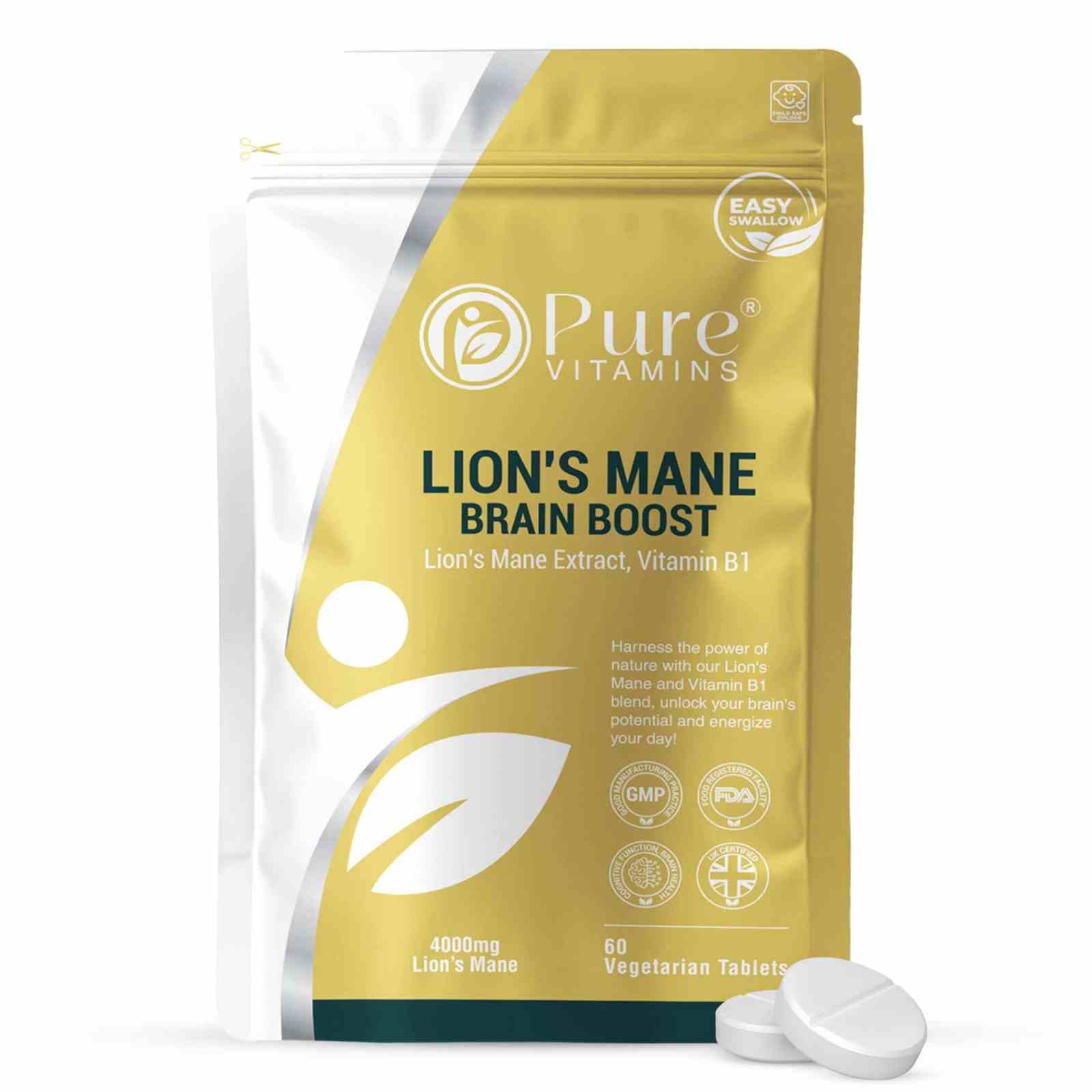
Our Lion's Mane 4000mg is a concentrated extract paired with vitamin B1 (thiamine). That pairing is deliberate: thiamine contributes to normal psychological function and to the normal functioning of the nervous system, so it gives the formula a genuine, everyday role that sits neatly alongside a traditional, research-interesting mushroom extract. You get the heritage ingredient and a vitamin that pulls real weight.

How to judge lion's mane quality from the label
- Part used: look for fruiting body, or a clearly stated fruiting-body-and-mycelium blend, rather than unspecified "mushroom".
- Beta-glucan content: a stated beta-glucan percentage is a better quality signal than total polysaccharides (which can include grain starch).
- Extract strength: a concentration ratio (for example 8:1) or an extract weight such as 4000mg equivalent tells you more than raw powder weight. See full-spectrum vs extract.
- Testing and origin: we formulate in the UK and our products are tested for purity and heavy metals at our GMP-certified facility.
A few cautions worth knowing
Lion's mane is generally well tolerated as a food and food supplement, and human safety reports are reassuring at typical intakes. Even so, sensible caution applies. If you are pregnant or breastfeeding, there is little safety data, so it is best avoided unless your healthcare professional advises otherwise. People with known mushroom allergies should steer clear. If you take prescription medication, including blood thinners or treatments that affect blood sugar, or you have a medical condition, check with your GP or pharmacist before starting, simply because robust human interaction data is limited.
Frequently asked questions
What are the main active compounds in lion's mane?
The compounds that make lion's mane distinctive are hericenones (mainly in the fruiting body) and erinacines (mainly in the mycelium), alongside beta-glucans, antioxidant phenolics and ergothioneine.
Are hericenones and erinacines the same thing?
No. Hericenones are geranyl-resorcinol derivatives concentrated in the fruiting body, while erinacines are cyathane-type diterpenoids concentrated in the mycelium. They are chemically distinct and occur in different parts of the mushroom.
Do beta-glucans tell you anything useful?
Yes. A stated beta-glucan percentage is a practical marker of extract quality and helps you tell a concentrated mushroom extract from a starch-heavy mycelium-on-grain product.
What does the vitamin B1 in the formula do?
Thiamine (vitamin B1) contributes to normal psychological function and the normal functioning of the nervous system, so it gives the formula a genuine everyday role alongside the mushroom extract.
For the bigger picture on what the science does and doesn't support, see lion's mane and focus: what the research actually says, or explore the full range at Pure Vitamins UK.
Food supplements should not be used as a substitute for a varied, balanced diet and a healthy lifestyle. If you are pregnant, breastfeeding, taking medication or managing a medical condition, speak to your GP or pharmacist before starting a new supplement. Signed, Dr. Miron, Founder of Pure Vitamins UK.

