

Lion's mane: fruiting body vs mycelium
The difference between lion's mane fruiting body and mycelium is the detail that separates a quality extract from a weaker one. The fruiting body is the visible mushroom and is generally the prized, higher-quality source, while mycelium is the root-like network that is often grown on grain and can dilute the final powder. Knowing which one is on your label tells you a lot about what you are really buying.
Reviewed and updated: 23 July 2026

Lion's mane (Hericium erinaceus) is a striking white, cascading-spined mushroom that people in East Asia have eaten and brewed for centuries, valued both as a delicacy and as a traditional tonic long associated with focus and mental clarity. When you buy it today as a supplement, though, the part of the mushroom used makes a real difference to quality, so it is worth understanding.
TL;DR
- Fruiting body: the visible mushroom, generally the prized, higher-quality source for an extract.
- Mycelium: the root-like network, often grown on grain, which can dilute the finished powder.
- The one thing to know: look for fruiting body named on the label plus a stated extract ratio. Vague mushroom powder tells you nothing.
The two parts of a mushroom
A mushroom organism has two main parts. The fruiting body is the visible mushroom itself, the part you would recognise growing; in lion's mane this is the white, cascading-spined structure. The mycelium is the thread-like root network that grows through the substrate (the material the mushroom grows on), usually out of sight.
Why the distinction matters
The two parts differ in composition. Based on research retrieved from PubMed, hericenones are associated with the fruiting body, while erinacines are associated with the cultured mycelium, so the part used genuinely changes the compound profile (Li et al., 2014, DOI). Beyond the chemistry, there is a practical quality issue: mycelium is often grown on a grain substrate and harvested together with it, which can dilute the final powder with leftover grain and its starch. Fruiting-body extracts avoid that dilution, which is why they are generally regarded as the higher-quality choice.

Full-spectrum vs concentrated extract
The other label question is full-spectrum versus concentrated extract. A full-spectrum powder is the whole dried mushroom milled up, so it keeps everything the fruiting body contains but at a natural, lower concentration. A concentrated extract is made by drawing the active compounds out with hot water or alcohol and removing the bulk, which is what an extract ratio such as 8:1 describes — eight parts raw mushroom reduced to one part extract. Neither is automatically better: a full-spectrum product is closer to the food, while a good fruiting-body extract with a stated ratio and beta-glucan figure gives you more actives per capsule. What matters either way is that the label is specific rather than vague.
What to look for on a label
- Fruiting body stated explicitly, the prized part and a sign the brand is not cutting corners with grain-grown mycelium.
- An extract ratio (for example 8:1 or 10:1), indicating concentration — see the full-spectrum vs extract section above.
- A stated beta-glucan content, a meaningful potency marker, covered in what's in lion's mane.
- Steer clear of vague mushroom powder with no part or ratio stated, because you cannot judge what you are getting.
What the research has explored
The reason people care about the compounds at all is that lion's mane is an interesting research subject. Based on a small double-blind, placebo-controlled trial retrieved from PubMed, older adults taking lion's mane over 16 weeks showed improved scores on a cognitive scale, though the effect faded once they stopped (Mori et al., 2009, DOI). That is early science rather than a settled conclusion, and it is one reason the quality and source of the extract you choose are worth getting right.
Is one part safer than the other?
Both the fruiting body and mycelium of lion's mane have a long history of dietary use, and the safety research is reassuring. The study above also reported no adverse effects from an erinacine-enriched mycelium over 28 days, with a no-observed-adverse-effect level greater than 3 g per kg of body weight per day in the animal model used (Li et al., 2014, DOI). The fruiting-body preference is therefore about composition and quality, not a safety concern.

Where our extract sits
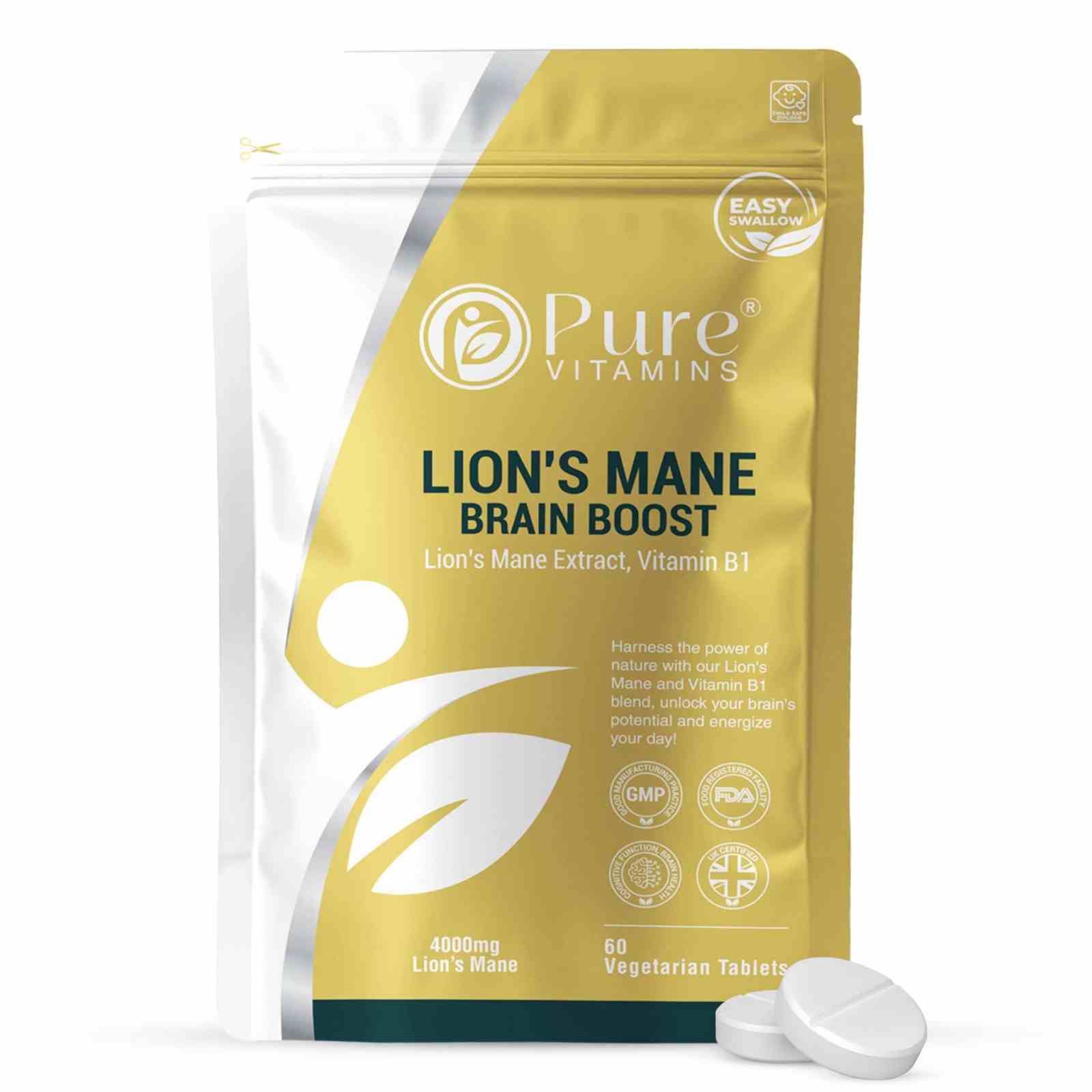
Our Lion's Mane 4000mg is a concentrated extract chosen for quality and described transparently by its strength. It is paired with vitamin B1 (thiamine), because thiamine contributes to normal energy-yielding metabolism and the normal functioning of the nervous system. It is formulated in the UK and manufactured in a GMP-certified facility.
A few cautions worth knowing
Lion's mane is a culinary mushroom with a long safety history, but avoid it if you have a mushroom allergy, and if you are pregnant, breastfeeding, taking medication or managing a medical condition, check with your GP or pharmacist before starting.
The takeaway
Fruiting body is the visible mushroom and generally the higher-quality source; mycelium is the root network, sometimes grown on grain that dilutes the powder. For a lion's mane supplement, fruiting body on the label plus a stated extract ratio is what to look for. Browse the range on our Pure Vitamins UK home page.

Frequently asked questions
Is fruiting body better than mycelium? For most quality extracts the fruiting body is preferred, because mycelium grown on grain can dilute the powder. The compounds also differ between the parts.
What is the difference in compounds? Hericenones are associated with the fruiting body and erinacines with the mycelium.
How do I check on a label? Look for the part named (fruiting body), an extract ratio, and ideally a stated beta-glucan content.
Is mycelium unsafe? No. The preference is about composition and quality, not safety.
Food supplements should not be used as a substitute for a varied, balanced diet and a healthy lifestyle. If you are pregnant, breastfeeding, taking medication or managing a medical condition, speak to your GP or pharmacist before starting a new supplement. Dr. Miron, Founder of Pure Vitamins UK.

