

How to choose the best collagen supplement: the short answer
To choose the best collagen supplement in the UK, look for hydrolysed Type I (or Type I and III) peptides from a clearly stated marine or bovine source, at a sensible daily dose, paired with vitamin C, which is the one ingredient that carries an authorised collagen-formation claim. Everything else on the label is detail. One honest point shapes this whole guide: in Great Britain collagen itself is not authorised to carry any specific health claim, so no brand may lawfully say collagen reduces wrinkles, rebuilds joints or thickens hair. What follows is how to judge a collagen product on what is genuinely in it.

What collagen actually is
Collagen is the most abundant structural protein in the body, found in skin, bone, tendon and connective tissue. Supplemental collagen is almost always hydrolysed, meaning it is broken into shorter chains called peptides so it mixes cleanly and is easier to digest. When you compare products, the things that genuinely differ are the collagen type, the source, the format, the dose, and whether vitamin C is included. We take each in turn, and you can read the fuller explainer in what is hydrolysed collagen.
Collagen type: I, II or III?
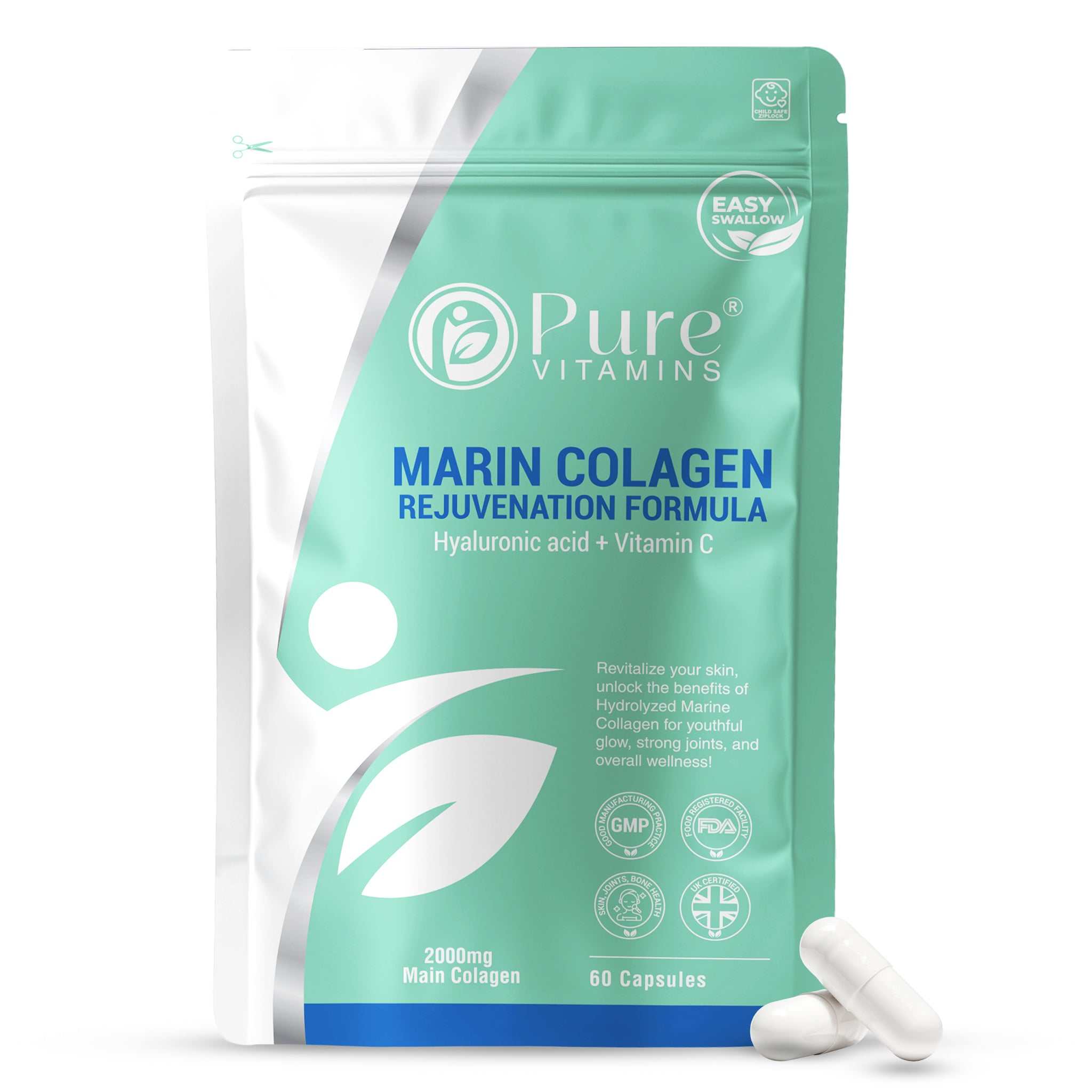
Different collagen types predominate in different tissues. Type I is the most abundant and is concentrated in skin, bone and tendon; Type III usually appears alongside it in skin and connective tissue; Type II is associated more with cartilage. Most general and beauty-oriented supplements centre on Type I, often with Type III. Our Marine Collagen capsules are Type I, while our Bovine Collagen capsules and Bovine Collagen powder provide Types I and III. We break the numbers down in Type I and III collagen explained.
Source: marine or bovine?
Marine collagen is sourced from fish and is predominantly Type I, which makes it a popular choice for skin-focused routines and suitable for pescatarians. Bovine collagen comes from cattle, supplies Types I and III, and is often more cost-effective per gram. Neither is universally better; it comes down to your dietary preference and which types you want. We compare them in full in marine versus bovine collagen.

Format: powder or capsules?
Powders let you take a larger dose and stir it into a drink, while capsules offer convenience and precise, tasteless dosing. It is a lifestyle choice rather than a quality one. Our powder delivers a high 14,000 mg per serving, whereas capsules suit people who would rather not measure or mix. We weigh up the trade-offs in collagen powder versus capsules.
Are hydrolysed peptides better absorbed?
This is the mechanistic reason supplements use hydrolysed collagen rather than whole collagen. According to research retrieved from PubMed, a study of collagen peptides showed that small hydroxyproline-containing fragments such as Gly-Pro-Hyp and Pro-Hyp were enzymatically stable in the gut and able to cross the intestinal barrier, reaching higher plasma levels than high-molecular-weight collagen (Sontakke et al., 2016, DOI). To be transparent, this is laboratory and animal absorption evidence about the peptides themselves, not proof of any cosmetic outcome, and it does not change the fact that collagen carries no authorised UK health claim. What it does explain is why hydrolysed peptides are the sensible format to look for.

The vitamin C connection: the part that carries a claim
Here is the detail most collagen marketing skates over. Collagen itself cannot carry health claims, but vitamin C contributes to normal collagen formation for the normal function of skin, bones, cartilage, gums, teeth and blood vessels, and that is an authorised claim. So a collagen supplement that includes vitamin C rests on far firmer footing than one selling collagen on promises it cannot make. Both our capsule products include vitamin C for exactly this reason. We explain it in collagen and vitamin C.
How much collagen per day?
Collagen research commonly uses daily amounts in the region of 2.5 g to 15 g, and most powders are dosed in grams rather than milligrams, which is why our powder provides 14,000 mg (14 g) per serving. When you compare products, read the milligrams or grams per serving on the label rather than the headline on the front, and be wary of a small collagen amount hidden inside a proprietary blend. A clear, stated dose is a sign of a well-made product.
Suitability: vegan, pescatarian, gluten and added extras
Collagen is animal-derived, so it is never vegan. Marine collagen is the pescatarian-friendly option, while bovine is sourced from cattle. If you avoid certain sources for dietary or religious reasons, check the source on the label. Also check for common allergens and added extras: hyaluronic acid is a frequent companion ingredient in collagen beauty formulas, and our capsule products include it alongside vitamin C. We cover how to take it and the hyaluronic acid pairing in collagen and hyaluronic acid.

If hair and nails are your real goal
It is worth knowing that for hair and nails specifically, collagen is not where the authorised claims sit, but biotin, zinc and selenium are. Biotin and zinc contribute to the maintenance of normal hair, and zinc and selenium contribute to the maintenance of normal nails, with zinc also contributing to the maintenance of normal skin. If that is your priority, our Biotin, Zinc and Selenium tablets bring all three together, and some people pair them with a collagen-and-vitamin-C product as part of a wider routine.
What collagen can and can't claim (and red flags)
Because this is where shoppers get misled, it is worth being blunt. In the UK, collagen may be described by its composition (type, source, dose, hydrolysed peptides) but not by health outcomes. Any product promising collagen erases wrinkles, rebuilds cartilage or regrows hair is overstepping what is permitted, which makes it a red flag rather than a reason to buy. The claimable elements in a collagen formula are the added vitamins, chiefly vitamin C, and the honest brands lean on those.
An honest checklist
- Stated collagen type: Type I for skin-focused, Types I and III for broader structural support.
- Clear source and dose: marine or bovine, with the grams per serving on the label, not hidden in a blend.
- Hydrolysed peptides: for clean mixing and absorption.
- Vitamin C included: the one ingredient that carries an authorised collagen-formation claim.
- Quality standards: made in a GMP-certified facility and tested for purity and heavy metals at our GMP-certified facility, with a Certificate of Analysis available on request.
- No miracle claims: treat wrinkle or joint promises as a warning sign.
Where our range sits
We built three collagen options around these principles: Marine Collagen capsules (Type I, with hyaluronic acid and vitamin C), Bovine Collagen capsules (Types I and III, with hyaluronic acid and vitamin C), and Bovine Collagen powder (Types I and III, 14,000 mg, unflavoured). Each is described by what is in it, and you can browse the wider range on our Pure Vitamins UK home page.
Frequently asked questions
What is the best type of collagen supplement? For most people, hydrolysed Type I or Types I and III peptides from a clearly stated source, paired with vitamin C, is the sensible choice. The right source (marine or bovine) depends on your diet.
Is marine or bovine collagen better? Neither is universally better. Marine is Type I and pescatarian-friendly; bovine adds Type III and is often better value. See our marine versus bovine comparison.
How much collagen should I take? Studies commonly use around 2.5 g to 15 g per day. Check the grams per serving on the label rather than the front-of-pack headline.
Does collagen really work for skin or joints? In the UK collagen carries no authorised health claim, so we cannot claim a benefit. The claimable element in a collagen formula is vitamin C, which contributes to normal collagen formation.
Is collagen suitable for vegans? No, collagen is animal-derived. Marine collagen is suitable for pescatarians.
This article is for general information and is not medical advice. Food supplements should not be used as a substitute for a varied, balanced diet and a healthy lifestyle. Always consult a healthcare professional before use if you are pregnant, breastfeeding, taking medication or managing a medical condition.
Dr. Miron, Founder of Pure Vitamins UK.


